
15 Phrases That Build Bridges Between People

Business is changing. The experts sure seem to think so. Every day, some new article hypes a brave new world of egalitarian openness and collaboration. That might be true if you work for yourself. For the rest of us, it’s still a winner-take-all, command-and-control world. Always has been, always will be. The experts may own the language, but not reality. When leaders feel threatened or the ink runs red, they rarely tap into their talent for solutions. More often, they cut communication and withdraw behind closed doors. Corporate culture can overcome many hurdles, but never human nature.
In reality, business has evloved little. Work still involves small victories and slow progress, often ambiguous and rarely permanent. That said, what drives workers has changed little too. Besides money, they want a voice. They dream of receiving a fair shot to make a difference. And they long to feel special. And all that starts with communication. These days, we’re taught that tone and body language are the message. But words – and what they signify – matter too. Over time, your character, competence, and caring may be revealed by your actions. In a micro world, it is the right words used at the right moments that spark conversations and build bridges between people.
1) Thank You: Common courtesy? Sure. But tell me this: When was the last time you forgot (or rejected) gratitude? Whether given in private or public, a sincere ‘thanks’ creates goodwill. Don’t forget your mother’s advice: “Say please.” People are always happier doing a favor than taking an order.
2) I Trust Your Judgment: Translation: “You have my permission. I believe in you. Now, go make it happen.” Feels pretty uplifting to hear that, doesn’t it? And I’ll bet you’d do almost anything to please someone who makes you feel that way. Your employees and peers are no different.
3) I Don’t Know: We don’t have all the answers. And it scares us to death. That’s a perfect point to start a dialogue…over facts and fears. Facing the unknown – and seeking assurances and answers – bonds people like nothing else. All you have to do is first admit what you don’t know.
4) Tell Me More: “I’m all ears.” It’s the ultimate conversation starter! When you signal that you’re open and intrigued, the other party will respond in kind. And who can resist flattery? Use phrases like “What do you think” or “What would you do” to acknowledge someone’s expertise. In doing so, you’re courting authentic suggestions, even if they challenge convention or skewer a sacred cow. If your interest is genuine, you may just fuel a productive exchange.
5) What I Hear You Saying Is: Ever wonder if someone has been listening to you? Be assured the person speaking to you is. So here’s a way to keep the ideas flowing. Step back and rephrase what someone says. In fact, vaguely distort or stray from it. This offers two benefits. It implies that you’re engaged, increasing the likelihood you’ll get more detail. It also helps you gauge the other person’s preparation, reasoning, and seriousness. It’s a win-win for everyone.
6) I’m On It: You’re giving your full attention. You’re saying, “Relax. Don’t worry about a thing. I’ll see to it personally.” That response can disarm just about anyone. To express a deeper commitment, use “You have my word.” This makes you more accountable to someone, conveying that you’re on board and will make it happen…whatever it takes.
7) How Else Can I Help You: It takes guts to speak up. People risk rejection, ridicule, or retaliation. Sure, you’ve discussed one issue. Chances are, this was just a test balloon to see how you’d react. This person probably wants to cover more; he’s just hesitant to ask. Make it easy on him. Extend the proverbial “what can I do” invitation to widen the conversation. And don’t be afraid to ask for help occasionally, either. People love to lend a hand. It provides purpose. When you’re humble and vulnerable, it humanizes you. It makes you one of them. And people trust those with whom they can identify.
8) I’ve Got Your Back: We’ve all made big mistakes. When we’ve recognized the gravity, the same question automatically pops up: “Am I getting fired for this?” It’s natural for co-workers and reports to imagine worst case scenarios. In those times, step in with a reassurance: “I’m not judging you. You’re going to get through this. You’re not alone. We’ll figure this out together. It’s going to be OK.”
9) My Pleasure: This subtle reminder reinforces a key point. You’re here to help others. You have all the time they need. And you’re happy to do it.
10) What If: Call it whatever you want: Imagination, wonder, inspiration, or vision. It’s that “why not” spirit that’s driven men and women to dream, create, and push limits. How often do you channel this force to hit it off with others? When was the last time you used a phrase like “How can we make this happen” or “Let’s try this out?” Go ahead. Open the floor to everyone. Put every option on the table. Don’t judge them based on budgetary, time, labor, or cultural considerations. Sure, most ideas won’t be feasible or relevant. But you’re seeking that nugget that makes your organization just a little more competitive and enjoyable. You can find the means another time.
11) Let Me Play Devil’s Advocate: Looking for a subtle way to critique? Turn the conversation into an exercise where you’re a detached party performing a function: Poking holes in the logic and plan of attack. Maybe you need to reel the other person back to the big picture. Maybe you want to direct him towards missing pieces, pros and cons, or alternatives. Either way, you use this strategy to stress test ideas without making the process personal.
12) Let Me Think About That: Yeah, it sounds like a cop out. And it is…sometimes. Fact is, we don’t always have the authority or expertise to make decisions. This phrase buys you time and breathing space. It intimates that you’re open-minded and the request merits consideration. Then, set a date and time for follow up so the other person knows you’re taking him serious.
13) Well Done: It’s a cliché, no doubt. Sometimes, it isn’t enough just to say thanks. People want to know what they did was great and why. They pour so much sweat and soul into their projects. They need more than recognition that a task or goal was completed. They need to know their work was special and had meaning to someone.
14) You’re Right: Want to get someone’s attention? Tell him that he’s right. Once you yield the high ground, it’s much easier for the other party to swallow that the right plan and sentiment can’t always overcome the absurdities and restraints we face every day.
15) I Understand: People have such an innate desire to connect. They long to know they’re not alone, seeking others who’ve been where they are – and have successfully made it through. Helping someone doesn’t always involve making suggestions or calls. It may just involve being there, paying attention to what a person has to say. Most times, that’s enough to show you understand.
What phrases do you use to make people feel more comfortable, motivated, and appreciated?
Via http://www.forbes.com
12 Most Rehumanizing Ways to Reword Dehumanizing Business Jargon
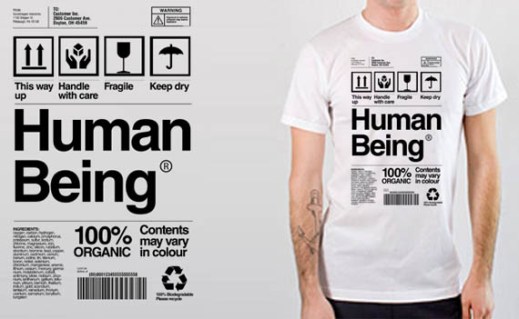
Can you tap a resource to execute the next project? Make sure you get it on their radar screen and really sweat the asset to get it done.
Business jargon is somewhat incomprehensible but always dehumanizing, demoralizing and demotivating. In offices all across the United States, we hear these phrases uttered at a constant pace. They make employees feel less than human and like a replaceable part in the massive corporate machine. However, it is simple enough to rehumanize that dehumanizing business jargon.
1. Resource
One of the most dehumanizing words in corporate jargon is resource. It can refer to a copy machine, paper clip or a person. If the resource being referred to breathes air, talks and has a name, it is best NOT to use the word resource.
2. Human capital
A close cousin to resource, but at least this phrase actually acknowledges that people are different than staplers. The people who spend 40+ hours a week working for a company are more valuable than this term implies. Without PEOPLE — a company cannot survive.
3. Tap
“We’d like to tap your brain for this upcoming project.” Ouch! You mean stick a metal object into my brain to drain out my intellect like I am a maple tree. No thanks, but I am happy to help you with the project.
4. It is what it is
This translates into I have completely given up on trying to solve this problem or I am completely powerless to help. Try listening, talking and coming up with solutions to see if you can change whatever “it is” into something better.
5. Radar screen
“You need to put this on your radar screen.” I don’t have a radar screen. Am I being promoted to an air traffic controller? How much harder could that be than playing Asteroids?
Instead, use “be aware of” or “take note” of the upcoming project.
6. Take it to the next level
“We need to take our deliverables to the next level.” Cool. Apparently, we are playing Super Mario Brothers at work and I didn’t realize it. I will get to the next level and save Princess Toadstool. Instead of this meaningless and overused phrase, outline the goals for the future and how the company is going to get there.
7. Bleeding edge
“There has to be bleeding edge thinking on this project.” This phrase just conjures up an image of a blood covered knife; not what I want to be thinking about if I want to push my thinking forward. How about using “creative thinking” or even “leading edge?” Anything is better than blood in the cubicle.
8. Execute
“How are we going to execute the project?” This overused word brings to mind more violent images and makes me wonder what did the poor project do to deserve this treatment? Try using the simple word “do” instead.
9. Bandwidth or cycles
“I’ll see if she has any bandwidth for these additional duties.” As much as I wish I was HAL 2000 refusing to open the pod bay doors, employees are not computers. Try instead this fantastic word – time. “I’ll see if she has the time for these additional duties.”
10. Sweat the asset
A company that gets every last drop of value out of its resources whether it be a person or machine. When referring to employees, let’s just stop using this phrase, ok? Thanks.
11. Cross pollination
“By bringing together the two teams, we are hoping you can cross-pollinate.” We are getting bees in the office? Isn’t than dangerous? Bees sting.
Oh, you mean — “share ideas.”
12. Flight risk
“I think Joe’s a flight risk.” Have you thought that Joe might be a flight risk because you talk about him like a prisoner? I’d want to quit too if I felt like an inmate at my job.
Rehumanizing dehumaninzing language in the office place is easy — just talk like a human being in plain language that builds relationships rather than demoralizes them.
Via http://12most.com
10 Very Costly Typos

Typos can be embarrassing. They can also be costly. And not just for those individuals whose jobs depend on knowing the difference between “it’s” and “its” or where a comma is most appropriate. Last weekend, bauble-loving Texans got the deal of a lifetime when a misprint in a Macy’s mailer advertised a $1500 necklace for just $47. (It should have read $497.) It didn’t take long for the entire inventory to be zapped, at a loss of $450 a pop to the retail giant. (Not to mention plenty of faces as red as the star in the company’s logo.)
Google, on the other hand, loves a good typing transposition. Not only is the mega-search engine’s own name a happy accident (it was supposed to be Googol; the domain name was incorrectly registered), but Harvard University researchers claim that the company earns about $497 million each year from everyday people mistyping the names of popular websites and landing on “typosquatter” sites… which just happen to be littered with Google ads. (Ka-ching!)
Here are 10 other costly typos that give the phrase “economy of words” new meaning.
1. NASA’S MISSING HYPHEN
The damage: $80 million
Hyphens don’t usually score high on the list of most important punctuation. But a single dash led to absolute failure for NASA in 1962 in the case of Mariner 1, America’s first interplanetary probe. The mission was simple: get up close and personal with close neighbor Venus. But a single missing hyphen in the coding used to set trajectory and speed caused the craft to explode just minutes after takeoff. 2001: A Space Odyssey novelist Arthur C. Clarke called it “the most expensive hyphen in history.”
2. THE CASE OF THE ANTIQUE ALE
The damage: $502,996
A missing ‘P’ cost one sloppy (and we’d have to surmise ill-informed) eBay seller more than half-a-mill on the 150-year-old beer he was auctioning. Few collectors knew a bottle of Allsopp’s Arctic Ale was up for bid, because it was listed as a bottle of Allsop’s Arctic Ale. One eagle-eyed bidder hit a payday of Antiques Roadshow proportions when he came across the rare booze, purchased it for $304, then immediately re-sold it for $503,300.
3. THE BIBLE PROMOTES PROMISCUITY
The damage: $4590 (and eternal damnation)
Not even the heavenly father is immune to occasional inattention to detail. In 1631, London’s Baker Book House rewrote the 10 Commandments when a missing word in the seventh directive declared, “Thou shalt commit adultery.” Parliament was not singing hallelujah; they declared that all erroneous copies of the Good Book—which came to be known as “The Wicked Bible”—be destroyed and fined the London publisher 3000 pounds.
4. PASTA GETS RACIST
The damage: $20,000
A plate of tagliatelle with sardines and prosciutto would typically only be offensive to a vegetarian’s senses. But an unfortunate blunder in The Pasta Bible, published by Penguin Australia in 2010, recommended seasoning the dish with “salt and freshly ground black people.” Though no recall was made of the books already in circulation, the printer quickly destroyed all 7000 remaining copies in its inventory. Read More…
10 Places to Ignore Your Grammar and Spelling Checker
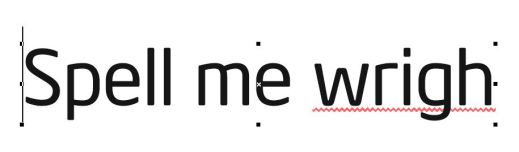
Because grammar and spelling checkers are software programs, they can’t read your mind or know your intentions. They also frequently cannot distinguish between correct and incorrect sentence structures and the use of words that sometimes confuse us humans. Below are 10 places in which your software may be suggesting errors rather than correcting them.
Eric, thanks for writing this article. [The comma after Eric’s name is correct because we are addressing him directly.]Dave, in the employee version, add an example here. [My checker suggested changing add to adds–wrong!]Lynn, may we have permission to print your material? [It suggested that I capitalize may as a month, which is incorrect, of course!]
When you write to Mark about the program in Kansas City, be sure he understands that it is in Missouri.
If you want to help employees improve their writing, use this guide.
Any files beginning with 000 need to be moved to the C drive. [Need is correct–not needs.]Thank you for letting us know about your shopping experience. [Know is correct–not knows!]The average number of words per sentence is 15 to 20. [The verb is is correct; are would be wrong.]

One Question IQ Test

From Chronowatch, “here’s a one-question IQ Test to help you decide how you should spend the rest of your day….”
There is a mute who wants to buy a toothbrush. By imitating the action of brushing one’s teeth, he successfully expresses himself to the shopkeeper and the purchase is done.
Now, if there is a blind man who wishes to buy a pair of sunglasses, how should he express himself?
Think about it first before looking below for the answer…
.
.
.
.
.
.
.
.
.
.
.
.
He opens his mouth and says, “I would like to buy a pair of sunglasses”.
If you got this wrong- please turn off your computer and call it a night.
guess it’s time for me to also power down…
Quote of the day: leadership

Leadership is the art of getting someone else to do something you want done because he wants to do it.
Dwight D. Eisenhower
Photo credit: http://sanityofficeservices.com




AWARDS









 Just English