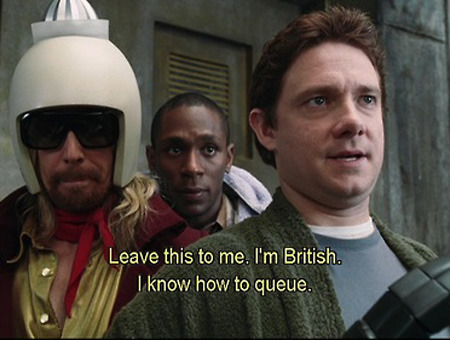
Word of the day: subpoena

Pronunciation: /səˈpiːnə/
noun
-
(in full subpoena ad testificandum) a writ ordering a person to attend a court: a subpoena may be issued to compel their attendance [mass noun]: they were all under subpoena to appear
verb (subpoenas, subpoenaing, subpoenaed or subpoena’d)
[with object]
-
summon (someone) with a subpoena: the Queen is above the law and cannot be subpoenaed
-
require (a document or other evidence) to be submitted to a court of law: the decision to subpoena government records
Origin:
late Middle English (as a noun): from Latin sub poena ‘under penalty’ (the first words of the writ). Use as a verb dates from the mid 17th century
Subpoena translates to “under punishment” in Latin. It is an order from a court for a person to appear at a trial under punishment for failure to appear. If the person given a subpoena does not appear, some courts have the discretion to find the person in contempt of court and either order the person’s arrest or issue fines accordingly.
The term subpoena is primarily used in US courts. The preferred term in the UK is now Witness Summons, at least in civil trials. In either country, the subpoena is usually written by the court clerk after he or she has been given a list of witnesses for a trial. The court clerk then writes out, usually in a form letter, a request for the witness’ presence at a specific date and time for testimony.
When the testimony has lagged or the trial has been delayed, those receiving a subpoena still must appear at the specified date and time. The witness may then be given another date and time to appear, or may have to wait several hours or days to deliver testimony. If one has a time conflict of a serious nature, contacting the court or the attorneys may help change the subpoena date to a better time. In some cases, testimony has been given over long distances, or has taken place in locations other than the court, such as hospitals. In these cases, both the defense and prosecuting lawyer must be present so that fair examination and cross-examination can both take place.
When a subpoena is issued, it is usually the responsibility of the attorney to deliver it. In criminal cases for example, the defense lawyer will deliver subpoenas to any witnesses who might help prove innocence. The prosecuting attorney will deliver subpoenas to those who can help prove the guilt of the accused.
As well, in divorce or child custody hearings, a subpoena can be issued to one of the spouses. Failure to appear in a child custody trial is tantamount to giving up custody of one’s child. Failure to appear in a divorce proceeding tends to mean the divorce is uncontested and may be granted immediately. Financial or custodial arrangements after the divorce usually will favor the appearing spouse.
The US Congress is empowered to send subpoenas when testimony is required in a congressional investigation. The US Congress, like the federal and state courts, can fine people who ignore a summons to testify. A person failing to appear is said to be in contempt of congress.

Idiom: Chip on your shoulder

Fig. a bad attitude that tends to get someone easily upset.“Why did you get so angry at the slightest criticism? You seem to have a chip on your shoulder.”
Meaning
A perceived grievance or sense of inferiority.
Origin
The word chip has several meanings; the one that we are concerned with here is the earliest known of these, namely ‘a small piece of wood, as might be chopped, or chipped, from a larger block’. The phrase ‘a chip on one’s shoulder’ is reported as originating with the nineteenth century U.S. practice of spoiling for a fight by carrying a chip of wood on one’s shoulder, daring others to knock it off. This suggested derivation has more than the whiff of folk-etymology about it. Anyone who might be inclined to doubt that origin can take heart from an alternative theory.
It should probably look like:

AND it does not imply a real chip or a piece of chips, mind you 🙂

NOR

NOT, not even that chip. Certainly not.


Word of the day: n00b

A. INTRO
I. What is this?
II. Defining ‘Noob’
B. COMMON NOOB CHARACTERISTICS
I. Noobish
II. Where to find noobs
III. Behavior of noobs
IV. Noob religion
V. More about noob habitats
C. AVOIDING NOOBS
I. Make sure you aren’t one
II. Major noob avoiding strategies
————————

A. INTRO
I. What is this?
This guide is designed to give you a better understanding of what a noob is, how to recognize them, some details about them, and how to avoid or get rid of them. It mostly applies to online forums, which are the main targets of migrating noobs.
II. Defining ‘Noob’
Contrary to the belief of many, a noob/n00b and a newbie/newb are not the same thing. Newbs are those who are new to some task* and are very beginner at it, possibly a little overconfident about it, but they are willing to learn and fix their errors to move out of that stage. n00bs, on the other hand, know little and have no will to learn any more. They expect people to do the work for them and then expect to get praised about it, and make up a unique species of their own. It is the latter we will study in this guide so that the reader is prepared to encounter them in the wild if needed.
Noobs are often referred to as n00bs as a sign of disrespect toward them, and it’s often hella funny, but I will refer to them as noobs during this reading.
* Usually the topic at hand on an internet forum.
B. COMMON NOOB CHARACTERISTICS
I. Noobish
Often, but not always, noobs will attempt to communicate in their own primitive language, known as “n00bish.” It is a variant of the hacker language that exposes them as having little intelligence or will to learn. Here is an example of some noobish. Do not attempt to comprehend it: it cannot be discerned without professionals at hand.
stFU /../..an, i r teh r0xx0rz liek emin3m, u cna go tO EHLL OR ATLE4St help m3 wit hthIS!!111!!!!!!!1~~1!!“!! LOLLOLOLLOLOLlOoLLOlollLLl u n00b
Although you may find this unbelievably funny and/or annoying, it is best to restrain yourself and keep from talking back to them, as they are very territorial and easily angered. This will result in their attempted verbal abuse of you, possibly backed up by other noobs, because they work in packs when doing offensive tasks. It is not an easy task to learn this language because our intelligent accent will keep it from sounding quite right when spoken. You can write some simple noobish of your own, however, by slamming your face into your keyboard repeatedly.
II. Where to find n00bs
On the internet, n00bs make their colonies on forums. They migrate in waves, usually on weekends, and proceed to clog up bandwidth with stupid questions and sometimes even stupid answers. If you happen to be unfortunate enough to be on a board large enough to attract migrating noobs, there will hopefully be authority in charge who is smart enough to take extermination measures before they can make nests and larger colonies. THE BANNER HAMMER is one form of authority.
Larger colonies can result in the mutation of some into spammers. Not commercial spammers, but pointless spammers. A noob can become one of these at any point, but the larger the amount of noobs, the more chance pointless spammers will appear.
Off the internet, noobs appear anywhere the focus is on learning or discussing something specific.
III. Behavior of noobs
Since noobs are basically ignorant bastards, they have a lot in common. The most often seen characteristic is their fluency in noobish, which is why it got its own section. They will also be very self confident as if they were the absolute best at what they are in fact the worst at. Also, they are quite agressive and self-centered, and tend to laugh a lot using many L’s and O’s in rapid sucession (the noobish word for laughing like an ultimate retard).
It is their instinct to assemble in packs for defense, and they often attempt to organize packs that they call teams. Unfortunately for them, teams usually result in a total loss of communication and they can often begin to fight amongst each other. These teams are quite unlike those formed by non-noobs.
Noobs have difficulty reading English and cannot comprehend the idea of authority.
Therefore, they have an all-out disregard for rules, basic or not. A good way to identify a noob (bad) vs. a newb (good) is to tell them (or have an authority tell them) which rule they are unknowingly breaking. If they respond with an apology and fix it, they are probably not a noob. If they react by insulting everything around them in rapid noobish and causing general mayhem, it is because they are a noob and have had a small seizure due to their inability to understand what is happening.
IV. Noob Religion
Noobs follow a variation of the 1337 (sometimes 7331) religion, in which they worship the number in odd rituals and put altars in their forum avatars and signatures. They often call themselves 1337, which experts say is somewhat like calling themselves godly in a human language. It’s best to not interfere with their religious fantasies and practices because that can lead to a noob uprising, which can turn a forum to mush in less than a week.
V. More about noob habitats
Noobs often attempt to maintain their own web pages. Some common features of these lairs are a terrible lack of content, background music, lots of pointless animated gifs, and pages that say some variation of ‘tHEir isnothinG H34r yEtt LOLLOLOL!111!1!!~~~!!`! 13371337’, which means ‘Nothing here yet’ in noobish.
They will also have large, seemingly infinite marquees of 88X31 affiliate buttons replaced with red X’s scattered here and there, and possibly a hit counter showing a number less than 100. These habitats are numerous but fairly easy to avoid because only noobs link to them. So if you can identify a noob, don’t go to its homepage. Simple as that.
C. AVOIDING NOOBS
I. Make sure you aren’t one
Note: This section is bilingual so even noobs can make the discovery if they haven’t already.
English (T4lk)-
Read the above parts of this guide carefully. If you find yourself unable to comprehend any of it but are instead beginning to think about how great you are and how awesome ‘teh 1337’ is, you might want to take one of the many available online quizzes to check your noobancy.
Noobish (133713371337)- Liek, u gott4 re3D teh gudieCAREFUl1y and tehn OMG LIEK I AM R0XX0RZ ya anD ify 0u turn into teh reTARDED u gota go 2 MY WEBP4GE LOLLOLOL!!111~11 ad check 4 warez n stfuu. if u r a n00b go2HELL LOLLOLOlROFLMFAO11!!!11!!!! a/s/l pos gtg n00b suxx0rz ur b0xx0rz OLOOOLOLLLL HELP HELP HELP 1337133713371337
II. Major noob avoiding strategies
The main factor in attracting migrating herds of noobs is a large, active forum. If you find one of these, look to see if it has the management to avoid noob infestation. If not, look for a small or mid-sized forum that covers the same topic so you can enjoy your time there before the noobs find it.
Another way to keep noobs from interfering with your life is to become part of the authority on one of these forums. But that’s often hard to do so you’ll probably be better off avoiding larger forums first off. If you do manage to become part of the authority, however, take full advantage of it and establish extermination policies so that normal people can have a nice time without noob infestations.
They said what?!
Engrish it is:
n. The phenomenon of often hilarious gramatical catastrophes resulting from poor, usually over-literal translations of Japanese to English.
A form of English characterized by bad translation from Japanese by someone who is decent at translating vocabulary but has a poor grasp of English grammar. Tends to be a word-by-word literal translation with humorous results for native English speakers. Engrish is most common in old video games and anime subtitles.
The term “Engrish” comes from the fact that the Japanese language does not have distinct L and R sounds. They do have a consonant that is roughly somewhere in between these two sounds, but whether this translates to L or R in English depends on the situation (and therefore can be interpreted wrong.)
So, there they go:













In mood for some more Engrish?
Must go now I to ,
Idiom: Red Queen’s race

“Well, in our country,” said Alice, still panting a little, “you’d generally get to somewhere else — if you run very fast for a long time, as we’ve been doing.”
“A slow sort of country!” said the Queen. “Now, here, you see, it takes all the running you can do, to keep in the same place. If you want to get somewhere else, you must run at least twice as fast as that!” [1]
Through the Looking Glass, Lewis Caroll
A Red Queen’s race is any conflict situation where any absolute advances are equal on all sides such that the relative advantages stay constant despite significant changes from the initial state.
In other words … Much Ado/efforts and pains About Nothing; all for naught.
Learn more @ http://rationalwiki.org
Stopping now,
Shh, she’s writing
..and then reading it. And then writing again.
If you feel that you could use some music to shut out from the outer world (and noises) and have some concentration, here you have a wonderful mix of instrumentals to help you. My favourite contemporary classic, Ludovico Einaudi:
Writingly yours,
Co-worker vs. colleague

What is the difference?
Co-workers are all of those people you work with. Some are on the same level as you, some higher, some lower. You all work at the same place though so you are co-workers.
Colleagues are those people that are your occupational peers (equal level of position and responsibility). Two high school teachers at the same school are coworkers and colleagues. The principal is also their coworker but not their colleague. The principals colleagues are other school principals.
The dictionary tells us that colleagues share class or profession whereas coworkers simply “works with another…”
Via Yahoo answers
A little bit but now you know it,
Idiom: He will give the Devil his due

Meaning
Literally, pay the devil what you owe him. Used figuratively to mean ‘give back what you owe’, either money or favours.
Origin
From Shakespeare’s Henry IV Part 1, 1597:
Constable: I will cap that proverb with ‘There is flattery in friendship.’
Orleans: And I will take up that with ‘Give the devil his due.’
Fake English
We talked about learning the language in order to speak properly and get understood (properly!). Yep, check.
What about learning the lyrics before singing a foreign-language song?
More than 12.500.000 views on youtube. You need to see this.
Valentina Hasan, a contestant in the second season of the Bulgarian show “Music Idol” performs Mariah Carey’s song “Without you” in fake English:
The reaction of Mariah Carey:
Come on, sing along.
Ken leeeeeee, ….
P.S. Guess this other “American” song. Can you?


AWARDS









 Just English