

Do you speak ‘Project’?

Project management is a specialty, and it has its own language. Resistance is futile.
- Scope – It’s what has to be done. Always too general for some and too specific for others. Never right.
- Resources – Funding and people authorized for the project. Never enough and always in the wrong denominations.
- Schedule – How much time you have to get it all done. Never enough.
- Project Manager – You. The person responsible for everything, and in control of nothing.
- Sponsor – The one that wanted it in the first place. The one that shudders when you walk in because you always bring a problem, and give them way too many details.
- Customer – The group that want things their way.
- Vendor – The other group that wants things their way.
- Users – People addicted to the old way.
- Escalation – A process that defies gravity, and moves problems uphill.
- Documentation – The last task in a project, or later.
- Flowcharts – Cubicle art.
- Team – Your best friends. The group that, when asked who caused a problem, forms a circle and each person points to the left.
- Work Group – An oxymoron.
- Oxymorons – People that take more than their share of oxygen from a project.
- Project Plan – A deliverable assigned to the most annoying person on the project, who doesn’t recognize his or her work is done after the project has started and is going according to plan.
- Almost Done – Where you are after Day 1 of the project. What you say when the “80% done” answer quits working.
- RFI – Request for Information. A request for a customized marketing document.
- RFP – Request for Proposal. A request to take a monkey off a customer’s back.
- RFQ – Request for Qualifications. A request for a customized marketing document. A good source of boilerplate information for the RFP.
- RFQQ – Adds a price quote to the RFQ. Generally from a vendor that has too little information from a customer that has too little understanding. Binding.
- RFK – An important reminder that even the best project managers can find themselves in a bay of pigs.
- Proposal – A document of sweeping generalizations.
- Testing – What development is called after the development schedule has passed.
- Testing – What the end-users do when the testing schedule has passed. Sometimes called Post-implementation Support.
- Process Reengineering – Today’s processes, turned sideways.
- KPIs – Key Performance Indicators. Objective measures of failure, most often advocated by opponents. Never tracked.
- CSFs – Critical Success Factors. An early view of the blunders you will certainly make. Always tracked, but never called CSFs.
If this sounds familiar, you are an experienced project manager, undoubtedly overworked, underpaid and not appreciated. Get a dog.
Photo credit: http://www.study-habits.com
Empower your writing
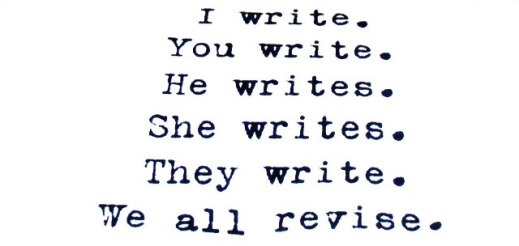
Stop using the dangling participle and misplaced modifiers
Both can seriously change the flow and meaning of your writing. It is important to make sure we qualify the intended words and not just any words in the sentence.
A participle is a verb that acts like an adjective and ends in –ing, such as swimming or cooking or diving. You name it! Any verb can be turned into a participle. A participial phrase is a phrase describing an action, “cooking on the stove”, “swimming in the ocean” and it is used to modify a noun in the sentence. A dangling participle modifies the unintended noun. Examples of dangling participles:
Misinterpreted: Cooking on the stove, Alice decided it was time to turn the vegetables.
It sounds as though Alice herself was being cooked on the stove.
Intended: Alice decided it was time to turn the vegetables that were cooking on the stove.
Misinterpreted: Sunburned and dehydrated, Mom decided it was time for the children to go into the house.
It sounds as though the Mom is sunburned and dehydrated.
Intended: Mom decided it was time for the children, who were sunburned and dehydrated, to go into the house.
A modifier is a word or a phrase that modifies something else in the sentence. Misplaced modifiers are modifiers that modify something else other than what you intended.
Examples of misplaced modifiers:
“I only walked my dog.” which means you did nothing but walk the dog. You did not feed or wash it, etc.
“I walked only my dog.” which means you did not walk anyone else such as your cat or your child, etc.
“I write mostly for other blogs.” which means that you write for other blogs most of the time but you may write for other sources as well.
“I mostly write for other blogs.” which means that your main activity is to write for other blogs. You may do other things too, such as sleep and eat but most of the time, you are writing for other blogs.
This is an excerpt from a book by Farnoosh Brock, available at Amazon.
Photo credit: http://maineschoolwritingcenters.blogspot.com/
Wishing you a wonderful Monday,
Quote of the day

“Those who are too smart to engage in politics are punished by being governed by those who are dumber.” – Plato
Photo credit: http://www.palestiniansurprises.com/
4 Movie Quotes to Get You Through Exams

There’s no doubt about it — exams are the pits. Being stuck in the library for hours, bored out of your mind is the absolute worst. Oh, and trying to get motivated to study instead of Facebooking? Forget about it. As much as you want to skip studying and play Call of Dutyinstead, you’ve got to snap out of it and hit the books. If the pressure of crunch time isn’t keeping you focused or getting you excited about philosophy or molecular biology, then check out these seven great movie quotes to get you through exams.
-
“Do, or do not. There is no try.” (Star Wars Episode V: The Empire Strikes Back)
The incredibly wise Yoda can teach us all a lesson or two about doing our best to succeed, especially when it comes to exams! Just like Yoda tells Luke Skywalker to either do something right or don’t do it at all, you should either study hard for your exams or not even bother if you’re only going to “try.”
-
“Remember, kid, there’s heroes and there’s legends. Heroes get remembered, but legends never die. Follow your heart kid, and you’ll never go wrong.” (The Sandlot)
Children of the ’90s know and love The Sandlot dearly. Just the thought of the movie can make you feel all warm and fuzzy inside, but it’s the wise words of Babe Ruth that make it even more awesome. So when you’re stuck in the library studying and wondering if you’ll ever make it in the history textbooks, remember what “The Great Bambino” said about heroes and legends and following your heart, kid.
-
“Stupid is as stupid does” (Forrest Gump)
Feeling stupid because you can’t remember the rules of exponents or who won World War I? Well, Forrest Gump would tell you, “Stupid is as stupid does.” This Southern saying means that no matter how stupid you or others think you are, your actions are the only thing that really matters. So, if you don’t study for your exams, but still expect to get all A’s, you might be, well, stupid.
-
“Life moves pretty fast. If you don’t stop and look around once in a while, you could miss it.” (Ferris Bueller’s Day Off)
Take it from wiseguy Ferris Bueller; he knows a thing or two about living life to the fullest. OK, so you might not be able to play hooky or get out of taking your exams, but as soon as you’re done with the grind of finals, get outside, dine at an upscale restaurant, go to a baseball game, jump on a parade float, and just have fun, the Bueller way.
Quote of the day: others

“Keep away from people who try to belittle your ambitions. Small people always do that, but the really great make you feel that you, too, can become great.” – Mark Twain
Tricky unique grammar

Just another note about the challenges of the English language. Why “a unique…” rather than “an unique…”?
When a “u” word is pronounced as though it begins with a “y” (yoo nique), it’s treated more like the consonant sound of the y.
So:
- a university;
- an umbrella;
- a usual day;
- an unusual day.
How to…?

Find out at: http://theoatmeal.com/comics/semicolon
Take a test BEFORE you start studying

“How do I start to prepare?”, invariably my answer is the same “Take a test.” BEFORE you decide to sign up for any course or tutor undertake any type of study it only makes sense that you find how much study you will need. Far too many people make assumptions about their scores. Whether you assume your score will be good or bad is irrelevant, it makes no sense to guess if you have the resources to find out the truth!
Once you’ve taken the test you must spend some time analyzing your performance and understanding what you need to do to achieve the score you want.
Character Feelings

You can describe your character’s feelings in more exact terms than just “happy” or “sad.” Check these lists for the exact nuance to describe your character’s intensity of feelings.
| Intensity of Feelings |
HAPPY | SAD | ANGRY | CONFUSED |
| High | Elated Excited Overjoyed Thrilled Exuberant Ecstatic Fired up Delighted |
Depressed Disappointed Alone Hurt Left out Dejected Hopeless Sorrowful Crushed |
Furious Enraged Outraged Aggrivated Irate Seething |
Bewildered Trapped Troubled Desperate Lost |
| Medium | Cheerful Up Good Relieved Satisfied Contented |
Heartbroken Down Upset Distressed Regret |
Upset Mad Annoyed Frustrated Agitated Hot Disgusted |
Disorganized Foggy Misplaced Disoriented Mixed up |
| Mild | Glad Content Satisfied Pleasant Fine Mellow Pleased |
Unhappy Moody Blue Sorry Lost Bad Dissatisfied |
Perturbed Uptight Dismayed Put out Irritated Touchy |
Unsure Puzzled Bothered Uncomfortable Undecided Baffled Perplexed |
| Intensity of Feelings |
AFRAID | WEAK | STRONG | GUILTY |
| High | Terrified Horrified Scared stiff Petrified Fearful Panicky |
Helpless Hopeless Beat Overwhelmed Impotent Small Exhausted Drained |
Powerful Aggressive Gung ho Potent Super Forceful Proud Determined |
Sorrowful Remorseful Ashamed Unworthy Worthless |
| Medium | Scared Frightened Threatened Insecure Uneasy Shocked |
Dependent Incapable Lifeless Tired Rundown Lazy Insecure Shy |
Energetic Capable Confident Persuasive Sure |
Sorry Lowdown Sneaky |
| Mild | Apprehensive Nervous Worried Timid Unsure Anxious |
Unsatisfied Under par Shaky Unsure Soft Lethargic Inadequate |
Secure Durable Adequate Able Capable |
Embarrassed |


AWARDS









 Just English