
50 Best Blogs for the Public Relations Major

News
Follow news in the world of PR with these blogs.
- PR Week: Check out PR Week for PR and communications news, as well as opinion, research, jobs, and events. (Recommended Post: Investment in Social Media Set to Increase Over Next Year)
- Everything PR: Stay on top of public relations news with Everything PR, a public relations news portal blog. (Recommended Post: 100 Media Monitoring Tools for PR)
- PR News: PR News will help you become a smart communicator with media relations, PR jobs, industry events, news, and much more. (Recommended Post: Do Something Different: Engage the Media Using Twitter)
- PRBlogNews: Find subjective public relations news and commentary on PRBlogNews.com. (Recommended Post: Useless Knowledge)
- O’Dwyers: On this New York-based blog, you’ll find insider news in public relations and marketing communications. (Recommended Post: Cooking PR Chile)
- PRSA Newsroom: Follow this blog from the Public Relations Society of America for awards, advocacy news, events, and more. (Recommended Post: PRSA Speaks Out on “Pay for Play”)
Public Relations
Follow these blogs to get a general look at public relations.
- Online Public Relations Thoughts: Read this blog to find daily thoughts on PR and trends in communication online. James Horton, the blog’s author, received three degrees, from UCLA, University of Missouri, and a university in Evanston, Illinois. (Recommended Post: Anger and Ignorance)
- PR in Your Pajamas: Find practical publicity ideas for entrepreneurs on PR in Your Pajamas. (Recommended Post: 15 Types of Stories That Get You Free Publicity)
- Tech PR Nibbles: Tech PR Nibbles features small insights and ideas for conversations, influences, and even bigger ideas. (Recommended Post: The Digital Miscommunicator)
- Skogrand PR Solutions Blog: Find solutions, tips, and insights on public relations, social media, and more on the Skogrand PR Solutions blog. (Recommended Post: An easy way to keep clients: surveys)
- Beyond the Hype: Lois Paul’s blog takes high tech PR beyond the hype and into reality. Paul writes from Boston, MA. (Recommended Post: Rebuilding Your Reputation by Digging a Deeper Hole)
- PR Couture: Read PR Couture for reflections and news in fashion PR. (Recommended Post: Fashion PR With an Editor’s Touch)
- The Flack: Follow Peter Himler’s blog to see the role public relations plays in politics, finance, technology, and more. (Recommended Post: Long Live PR (and the Press Release Too))
- Public Relations Blogger: On this blog, you’ll find resources for PR, social media, media relations, and more. The blog is authored by Ashley Wirthlin, a marketing associate and graduate of the University of Portland in Oregon. (Recommended Post: 4 Reasons Public Relations (Not Advertising) Builds a Brand)
- Drew B’s Take on Tech PR: See what Drew has to say about his work as a managing director at a tech PR agency. (Recommended Post: How Digital PR is Changing)
- Solor PR Pro: This blog is great for PR students who want to learn how to become a successful freelance PR consultant. (Recommended Post: Why You Need an Online Home Base — and How to Get One)
- Prowl Public Relations: Read Temple University’s student-run PR firm blog for PR strategies and knowledge beyond the classroom. (Recommended Post: Fighting the Dark Side of Social Media)
- PR Breakfast Club: Start your day off right with this PR blog for fresh PR news, education, and insight. (Recommended Post: Defending the PR Profession)
- Think: Temple University’s American Marketing Association shares this blog to get you thinking about PR. (Recommended Post: PR/Marketing/Events Internship)
Media & Communications
Check out these blogs for a guide to marketing, media, communications, and more.
- PR Meets Marketing: Find out about the application of PR and marketing on PR Meets Marketing. (Recommended Post: Beware of “Speeds and Feeds” PR)
- PR for Thought Leaders: This blog shares insight for B2B marketing and public relations. (Recommended Post: The Huge Mistake We All Make)
- COMMS corner: COMMS corner is the home of people-shaped communities. (Recommended Post: The Don Draper Guide to Social Media Marketing)
- Jeff Esposito: Jeff Esposito explores conversational media on this blog, and shares how you can win the race in communications and community building. (Recommended Post: Measuring Social Media and the Value of Information)
- Media Bullseye: On the Media Bullseye blog, you’ll find thoughts for communicating more with less. (Recommended Post: Ragu, Dads, and Lessons Learned for Communicators and Bloggers)
- Holtz Communication + Technology: Check out this blog to learn about communicating at the intersection of business and technology. (Recommended Post: It’s Not About You)
- Brian Solis: Follow Brian Solis’ blog to see the convergence of media and influence. (Recommended Post: The Rise of Social Commerce)
- Journalistics: In this blog, you’ll learn about topics at the intersection of public relations and journalism. (Recommended Post: A Look at How People Share Content on the Web)
- Media Relations Blog: Media Relations is dedicated to the world of media, public relations, and marketing. (Recommended Post: Beginner’s Guide to SEO for Optimized PR)
- Strategic Public Relations: Find strategy for integrated marketing communications on this blog. (Recommended Post: What Would Jesus Twitter?)
Social Media
Social media is one of the biggest things happening in PR these days, and these blogs offer great guidance for staying in touch via social media.
- PR 2.0: Deirdre Breakenridge offers strategies for new media, tools, and audiences on PR 2.0. (Recommended Post: PR 2.0 Checklist)
- Liberate Media: This online PR and social media agency has insight for online and offline expertise in PR. (Recommended Post: Crowdsourcing Compendium)
- Karen’s PR & Social Media Blog: Karen’s blog features reputation management, social media, and crisis communication, (Recommended Post: PR & Reputation Insurance for Clients)
- Peter Shankman: Peter Shankman’s blog is all about advice for social media and business from a guy who’s been there. (Recommended Post: Be Careful What You Post)
- 360 Digital Influence: On this blog, you’ll find fresh influences in social media and word of mouth marketing. (Recommended Post: How Hospitals are Quietly Leading the Way with Social Media)
- PR-Squared: On PR-Squared, read about the next big things that are already here with conversations in social media and marketing. (Recommended Post: Social Media Abhors a Vacuum)
- Social Realist: Check out Social Realist for social media without stupidity. (Recommended Post: A Few Words for Social Media Cyberbullies)
PR Professionals
On these blogs, you can read about PR from professionals who do it every day.
- Cathy Hrudicka & Associates: Cathy Hrudicka offers her advice and guidance as a PR, social media, and marketing mentor on this blog. (Recommended Post: An Unrelenting Passion to Make the World Better)
- WiredPRWorks: Barbara Rozgonyi offers inspiration in direct, digital, and dynamic marketing and PR on her blog. (Recommended Post: Most Powerful Twitter Women at the Moment)
- Voce Communications: Voce shares great ideas for building brand awareness and more on this blog. (Recommended Post: Understanding the Big and Small of Social Media Measurement)
- 360 Days in Our Circle: Follow this PR group to see what it’s really like to work in the world of public relations. (Recommended Post: How to Create a Viral Video)
- BiteMarks: BiteMarks takes a fearless look at global communications. (Recommended Post: Real-time Marketing)
- Communiqué PR: Communiqué PR offers insight into the life of a strategic public relations firm on this blog. (Recommended Post: Coca-Cola Fan Page Takes Facebook by Storm)
- A PR Guy’s Musings: Stuart Bruce shares his musings on public relations, corporate communications, and social media. (Recommended Post: An Inconvenient PR Truth)
- POP! PR Jots: This blog offers regular commentary on PR, publicity, and related topics in starting a public relations firm. (Recommended Post: I Don’t Do SXSWi)
- PerkettPRsuasion: Get a look into integrated PR, social marketing, and digital content on PerkettPR’s blog. (Recommended Post: The Art of Listening in Client Service)
- Next Communications: Riche Escovedo writes about conversations and communities in school communications and beyond on this blog. (Recommended Post: PR People Can Measure Social Media. We Just Need to Learn.)
- Dave Fleet: Follow Dave Fleet’s blog for a look at communications, social media, and PR. (Recommended Post: 8 Questions to Ask Your “Social Media Expert”)
- StevenSilvers: Read Steven Silvers’ field notes on PR and strategic influence on this blog. (Recommended Post: Five Things All PR Students Should Know About Their Choice of Career)
- prTini: Heather Whaling blogs about collaboration, integration, and social good on prTini. (Recommended Post: Say Hello: Beyond Social Media Cliques)
- Bloomacious: Carrie Leber’s blog features PR, event planning, and publicity, with the occasional style and craft feature. (Recommended Post: Desperate Housewives Set Style)
10 Ways to Improve Your SCRABBLE Game
#1: QI

Definition:: the vital force that in Chinese thought is inherent in all things (plural: QIS) About the Word:Devoted SCRABBLE players use the dictionary as their arsenal. Every variation of a word – plural forms, alternate spellings – can be used to gain the edge in competition. Although it’s most commonly spelled CHI in standard usage, the variant form QI is the single most-played word in SCRABBLE tournaments, according to game records of the North American SCRABBLE Players Association (NASPA). |
#2: ZA

Definition:: pizza (plural: ZAS) About the Word:ZA (often styled in print as ‘za) is a slang shortening of the word pizza. You may be surprised at the slang found on the tournament SCRABBLE board: BRO, HOMEY, and YO are all accepted words. ZA is the most played word containing the letter Z (and the only playable two-letter word with the letter Z) in tournament SCRABBLE play. Incidentally, .za is the country code for South Africa (Zuid-Afrika is Dutch for “South Africa”), but abbreviations and codes are not acceptable on the SCRABBLE board |
#3: Phoney

About the Word:You probably associate bluffing with poker, but it is just as much a part of serious SCRABBLE play. Tournament players will often make up words that look legitimate to the untrained eye – fake compounds like OUTMANAGE, or plausible misspellings like EJECTER. The choice to play a phoney is a strategic one. (And note: the spelling of the SCRABBLE-specific noun is not the usual phony.) If your opponent doesn’t challenge you, your bluff can earn you points and strengthen your position. If you lose a challenge, you lose your turn. “People win games by taking advantage of their opponents’ mistakes. Knowing the idiosyncrasies of our language is a huge advantage over those who do not,” says SCRABBLE champ Chris Cree. |
#4: RETINAS

Definition:: plural of RETINA, a membrane of the eye About the Word:Getting a rack with these seven letters can be viewed as a SCRABBLE bulls-eye. RETINAS has eight accepted anagrams – ANESTRI, ANTSIER, NASTIER, RATINES, RETAINS, RETSINA, STAINER, and STEARIN – which means nine different words can be played using those same seven letters. The strategic player will evaluate which anagram scores the most, which might most likely be challenged, and which might best accomplish the player’s desired board strategy. |
#5: XU

Definition:: a monetary unit of Vietnam (plural: XU) About the Word:X is a very powerful tile: all five vowels work with the eight-point X to make two-letter words (AX, EX, XI, OX are the four other words). When the X tile is used in an overlapped two-letter play with the X on a triple letter score, the player will almost always score at least 52 points. |
#6: ZLOTY

Definition:: a monetary unit of Poland (plural: ZLOTYS) About the Word:Most foreign currencies, like the previously mentioned XU, plus COLON (plural: COLONES), FRANC, KORUN (plural: KORUNAS, KORUNY, or KORUN), PESETA, NAKFA) are acceptable words. ZLOTY is powerful both because it has the valuable ten-point Z and because it has the unusual -YS plural. |
#7: Hook

About the Word:The SCRABBLE sense of hook isn’t found in standard dictionaries, but it’s defined on the North American SCRABBLE Players Association as:
SCRABBLE players don’t limit themselves to adding S to the end of a word. A single letter can make for surprising changes in the meaning or sound of a word. G can be hooked to the back of ASPIRIN to form ASPIRING and P can be hooked to the front of IRATE to form PIRATE. Members of the NASPA Facebook community shared some of their favorite hooks:
|
#8: GYOZA

Definition:: a stuffed and fried pocket of dough (plural: GYOZAS) About the Word:Many culinary words from around the world are acceptable in SCRABBLE play. The Japanese GYOZA, with the ten-point Z, is particularly valuable. Other useful terms include: SUSHI, PONZU, YAKITORI, SOJU, MOJITO, BURRITO, KNAIDEL, CAPRESE, and POUTINE. |
#9: Bingo

About the Word:A SCRABBLE play that uses all seven tiles is also known as a bingo. Tournament SCRABBLE players count on bingos in every game, because laying down a seven-tile word earns a “bingo” bonus of 50 points. Players building up their SCRABBLE skills might memorize the six-letter bingo stems that can create the most bingos. For instance, the letters AEINST can be used to create 70 different bingos with 23 different seventh letters. And count yourself extremely lucky if you start a game with MUZJIKS. This word (definition: Russian peasants) is the highest scoring opening word possible—128 points, when played without any blanks. |
#10: AMIGO
|

7 Band Names Defined: Go Gaga for Nirvana

Gaga
[gah-gah]

Nirvana
[nir-vah-nuh, –van–uh, ner-]

Styx

Eurythmics

wikimedia.org
Muse

REM
[rem]

Wilco
[wil-koh]
15 Famous Books Inspired by Dreams
One does not have to persistently study the literary canon in order to discover compelling narratives and characters. Turning inward and paying close attention to dreams and nightmares makes for an excellent way for aspirant writers to pull themselves out of creative ruts or get started on a new literary piece. Even before Sigmund Freud and Carl Jung wrote their seminal works on dream and archetype interpretation, some of the most famous and influential people (not just authors, playwrights and poets!) sought inspiration in the dreaming world. The following famous books contain elements inspired either by specific subconscious visuals or the bizarre, convoluted way in which they meander through the mind and senses.

Image courtesy: http://img2.wikia.nocookie.net
The Twilight Series by Stephenie Meyer
From Stephenie Meyer’s dreams of a sparkly vampire talking to a puny human woman came the media juggernaut about sparkly vampires and the puny human women who love them. She has yet to mention whether or not the series’ glorification of emotional abuse also came from her nocturnal adventures.

Image source: http://news.bbcimg.co.uk/
Much of H.P. Lovecraft’s Works
It probably comes as little shock to anyone even tangentially familiar with the work of horror master H.P. Lovecraft that the man pulled his inspiration from the vivid nightmares he suffered most nights. Any novel or short story featuring the Great Old Ones especially drew from the more twisted corners of his subconscious.

Image source: http://www.kelmscottbookshop.com
Pilgrim’s Progress by John Bunyan
Though no definitive answers exist regarding whether or not John Bunyan launched the classic Pilgrim’s Progress because of his dreams, he certainly pulled plenty of inspiration from their structure. So while nobody knows for certain, the fact that he so diligently paid attention to how they operated in order to pen his unearthly prose still earns him a place on this list.

Image courtesy: wikimedia.org
The Strange Case of Dr. Jekyll and Mr. Hyde by Robert Louis Stevenson
As with most of H.P. Lovecraft’s terrifying tales, this horror classic also sprang into existence because of its writer’s graphic nightmares. In this case, a “fine bogey tale” tormenting him as he slept grew into one of the most famous and genuinely scary English-language novels ever penned — most especially considering its all-too-human antagonist and protagonist.

Image source: http://litreactor.com
Misery by Stephen King
Another visceral, memorable novel revolving around humanity’s ugliest tendencies unsurprisingly popped straight from respected author Stephen King’s sleeping life. While dozing off on a flight to London, he found inspiration in a chilling nightmare about a crazed woman killing and mutilating a favorite writer and binding a book in his skin. The final product, of course, came out just a little bit different.

Image source: http://noorajahangir.files.wordpress.com
Frankenstein by Mary Shelley
Following the death of her and Percy Bysshe Shelley’s daughter at only 12 days old, the heartbroken Mary Wollstonecroft Godwin dreamt of the child coming back to life after massaging her near a fire. She wrote of it in the collaborative journal she kept with her poet lover (later husband), and most literary critics believe it later grew into one of the most iconic, influential horror novels of all time.

Image source: http://www.siteoffline.com
Stuart Little by E.B. White
One of the most memorable and beloved characters from children’s literature sauntered into E.B. White’s subconscious in the 1920s, though he didn’t transition from notes to novel until over two decades later. From there, the tiny boy with the face and fur of a mouse became a classic that continues to delight both adults and kids even today.

Image source: http://lh6.ggpht.com
Much of Edgar Allan Poe’s Works
Though separating fact from fiction when it comes to Edgar Allan Poe’s internal life remains a difficult task, most literary critics believe his legendary, hallucinatory poems and short stories stemmed from troubled nightmares. Considering how frequently dreams and dreamlike imagery and structure crop up in his oeuvre, it’s a more than safe assumption.

Image source: http://www.jmvarese.com
Jane Eyre by Charlotte Bronte
Part of the eponymous character’s personal arc stems from her highly detailed dreams, both asleep and diurnal slips in and out of consciousness. Though she may not have necessarily pulled inspiration from her own personal dreams, Charlotte Bronte wielded the common literary device of prophetic, subconscious visions, carefully aping their real-life hallucinatory, stream-of-consciousness structure.

Image source: http://www.facsimiledustjackets.com
Fantasia of the Unconscious by D.H. Lawrence
Really, most of D.H. Lawrence’s more lilting, dreamlike works such as Women in Love could qualify for inclusion here. However, Fantasia of the Unconscious so perfectly maps out such experiences and explains their importance and inspiration in such great detail it edges out any other competing works.

Image source: http://marshallmatlock.com
Book of Dreams by Jack Kerouac
Everything readers need to know about this novel comes straight from the title. Beat poster boy Jack Kerouac kept and published a book comprised entirely of his dreams, spanning from 1952 to 1960 and starring characters from many of his other works.

Image source: https://mikehawkeydotcom.wordpress.com
Jonathan Livingston Seagull by Richard Bach
Considering the heavy spiritual and philosophical core of Jonathan Livingston Seagull, it probably comes as little surprise that it initially sprung from Richard Bach’s daydreams of a drifting seabird. Interestingly enough, he could only finish the original draft following another series of subconscious visions!

Image source: https://murmursfromthebalcony.wordpress.com
The Apprenticeship of Big Toe P by Reiko Matsuura
Though available in English and enjoying cult rather than mainstream attention, the novel of a woman who wakes up with a penis for a toe became a bestseller in its native Japan. Her incredibly original premise, meant to explore gender identity and relations, came to her through a most unusual dream she eventually adapted into a favored work of fiction.

Image source: http://robertmijas.com
Twelve Stories and a Dream by H.G. Wells
“A Dream of Armageddon,” specifically, though some claim that many of H.G. Wells’ other classic science-fiction works likely sprouted partially from his dream life. As the title describes, this harrowing work speculates on the dangerous directions in which mankind’s technology could ultimately lead it.

Image source: http://sites.davidson.edu
“Kubla Khan” from Christabel by Samuel Taylor Coleridge
One of the most famous examples of dream-inspired literature, the famous poem — printed in the book Christabel – wafted into Samuel Taylor Coleridge’s brain from a combination of sleep and opium. One of his most beloved works, he described it as a “fragment” rather than a whole, though most critics these days analyze it as the latter.
113 words for different things one could eat
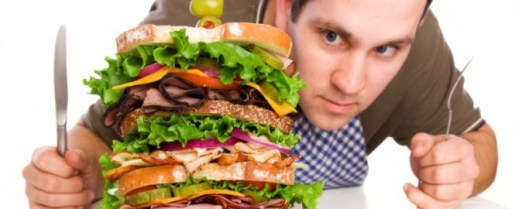
These words generally end in “phagous“, from the Greek phagein, or “vorous“, from Latin vorare, both verbs meaning “to eat“. Which suffix you want to use depends on whether you feel like having souvlaki or spaghetti.
Word |
Definition |
| allotriophagy | craving for strange foods |
| androphagy | cannibalism |
| anthropophaginian | cannibal |
| anthropophagous | (again) eating humans |
| aphagia | inability to eat or swallow |
| apivorous | eating bees |
| arachnivorous | feeding on spiders |
| autocoprophagy | eating one’s own feces |
| autophagy | feeding on body’s own tissues |
| baccivorous | eating berries |
| batrachivorous | frog-eating |
| bibliophagist | one who devours books, literally or figuratively |
| calcivorous | feeding on or living in limestone |
| cardophagus | donkey; something that eats thistles |
| carnivorous | eating flesh |
| carpophagous | fruit-eating |
| cepivorous | onion-eating |
| chthonophagia | eating dirt |
| comburivorous | consuming by fire |
| coprophagous | eating feces |
| creatophagous | carnivorous; flesh-eating |
| creophagous | flesh-eating; carnivorous |
| detritivore | animal that eats decomposing organic matter |
| dysphagia | pathological difficulty in swallowing |
| endophagy | cannibalism within a tribe; eating away from within |
| entomophagous | eating insects |
| equivorous | consuming horseflesh |
| exophagy | cannibalism outside one’s own group |
| foliophagous | eating leaves; eating folios of books |
| formivorous | eating ants |
| fructivorous | feeding on fruit |
| frugivorous | eating fruit |
| fucivorous | eating seaweed |
| galactophagist | milk drinker |
| gamophagia | destruction of one gamete by another |
| geophagy | practice of feeding on soil; dirt-eating |
| glossophagine | eating using the tongue |
| graminivorous | feeding on grass or cereals |
| granivorous | feeding on seeds |
| gumnivorous | feeding on tree saps |
| herbivorous | eating only plant matter |
| hippophagy | feeding on horses |
| homnivorous | eating humans |
| hylophagous | eating wood |
| hyperphagia | eating too much |
| ichthyophagous | fish-eating |
| insectivorous | eating insects |
| kreatophagia | eating of raw meat |
| larvivorous | feeding on larvae |
| lignivorous | feeding on wood |
| limivorous | eating mud |
| lithophagous | stone-swallowing; rock-boring; eating rock |
| lotophagous | feeding on lotuses; indolent; lazy; dreamy |
| mallophagous | eating wool or fleece |
| meconophagist | consumer of opium or heroin |
| meliphagous | feeding upon honey |
| mellivorous | honey-eating |
| merdivorous | dung-eating |
| microphagous | feeding on small creatures or plants |
| monophagous | feeding on only one type of food |
| mucivorous | feeding on plant juices |
| mycophagous | eating fungus |
| myristicivorous | feeding upon nutmegs |
| myrmecophagous | feeding on ants |
| necrophagous | feeding on the dead |
| nectarivorous | feeding on nectar |
| nucivorous | nut-eating |
| omnivorous | eating anything; eating both plant and animal matter |
| omophagy | eating of raw flesh as a ritual observance |
| onychophagist | nail-biter |
| ophiophagous | eating snakes |
| oryzivorous | rice-eating |
| ossivorous | feeding on bones |
| ostreophagous | oyster-eating |
| ovivorous | eating eggs |
| ovivorous | eating sheep |
| paedophage | eater of children |
| pagophagia | eating trays of ice to help offset iron deficiency |
| panivorous | bread-eating |
| pantophagy | omnivorousness |
| phthirophagous | lice-eating |
| phyllophagous | leaf-eating |
| phytivorous | feeding on plants |
| phytophagous | feeding on vegetable matter |
| piscivorous | fish-eating |
| placentophagy | eating of the placenta |
| plantivorous | plant-eating |
| plasmophagous | consuming plasma |
| poephagous | eating grass or herbs; herbivorous |
| poltophagy | prolonged chewing of food |
| polyphagous | eating many types of food |
| psomophagy | swallowing food without thorough chewing |
| radicivorous | eating roots |
| ranivorous | eating frogs |
| rhizophagous | root-eating |
| rhypophagy | eating filth |
| sanguivorous | blood-drinking |
| saprophagous | feeding on decaying material |
| sarcophagous | feeding on flesh; carnivorous |
| saurophagous | eating lizards |
| scatophagous | dung-eating |
| seminivorous | seed-eating |
| stercovorous | feeding on dung or excrement |
| thalerophagous | feeding on fresh vegetable matter |
| theophagy | sacramental consumption of a god |
| toxicophagous | eating poison |
| toxiphagous | poison-eating |
| univorous | living on only one host or source of food |
| vegetivorous | eating vegetables |
| vermivorous | eating worms |
| xerophagy | eating of dry food; fast of dry food in the week preceding Easter |
| xylophagous | wood-eating |
| zoophagy | eating animals |
SOURCE
Image source
C’mon, Get Happy: 7 Happy Expressions Defined
Happy as a clam
 Cute as they are, clams are not the most emotive creatures in the animal kingdom, so why do we say happy as a clam? Some have speculated it’s because a partially opened clam shell resembles a smile. But the expression is a shortening of the longer happy as a clam in mud at high tide or happy as a clam at high water, both of which were in usage by the mid-1800s and serve to mean “happy as a critter that’s safe from being dug up and eaten.” The longer expressions evoke a sense of relief more than the shorter happy as a clam, which is widely used to mean “extremely happy.”
Happy hour
 People were using the word happy to mean “intoxicated” as early as the mid-1600s, alluding to the merrymaking effect of alcohol. But the phrase happy hour didn’t catch on until the early 1900s. This expression originally referred to a time on board a ship allotted for recreation and entertainment for a ship’s crew. Nowadays the expression refers to cocktail hour at a bar, when drinks are served at reduced prices. This definition caught on around the era depicted in the well-lubricated offices of TV’s Mad Men.
Slaphappy
 Around the time of World War II, the word happy began appearing in words to convey temporary overexcitement. Slaphappy is one of these constructions, suggesting a dazed or “happy” state from repeated blows or slaps, literal or figurative. Slaphappy can mean “severely befuddled” or “agreeably giddy or foolish” or “cheerfully irresponsible.”
Trigger-happy
 Much like slaphappy, the happy in trigger-happy indicates a kind of temporary mental overstimulation. But in this construction, happy means “behaving in an irresponsible or obsessive manner.” The term trigger-happy entered English in the 1940s with the definition “ready to fire a gun at the least provocation.” Over time, it has taken on figurative senses including “eager to point out the mistakes or shortcomings of others” and “heedless and foolhardy in matters of great importance.”
Happy-go-lucky
 The word happy comes from the Old Norse happ meaning “chance” or “luck.” The wildcard nature of chance is reflected in the wide range of words that share this root. While the adjective happy-go-lucky, meaning “trusting cheerfully to luck” or “happily unconcerned or worried,” is widely used in positive contexts, its etymological cousin haphazard, carries a more negative connotation. The expression happy-be-lucky entered English slightly earlier than happy-go-lucky, but fell out of use in the mid-1800s.
Happy medium
 The phrase happy medium refers to a satisfactory compromise between two opposed things, or a course of action that is between two extremes. The notion of the happy medium is descended from an ancient mathematical concept called the golden section, or golden mean, in which the ratios of the different parts of a divided line are the same. This term dates from the 1600s, though is still widely used today.
Happy camper
 A happy camper is a person who is cheerful and satisfied, although the expression is frequently used in negative constructions, as in “I’m not a happy camper.” The word camper was widely used to refer to a soldier or military man when it entered English in the 1600s. It took on a more generic sense of one who camps recreationally in the mid-1800s, paving the way for the expression happy camper to emerge in the 1930s. Interestingly, use of the phrase happy camper skyrocketed in the 1980s.
Source and images
9 Ways to Laugh
1. Chortle
[chawr-tl]
 There are many different kinds of laughter. There’s the kind that leaves us clutching our bellies and gasping for air, and there’s kind that barely escapes our lips in restrained titters. The chortle, defined as “a gleeful chuckle,” falls somewhere in the middle. This term was coined by the beloved and whimsical wordsmith Lewis Carroll in his 1871 novel, Through the Looking-Glass, as a blend, or portmanteau, of the words chuckle and snort.
2. Guffaw
[guh-faw, guh-]
 A guffaw is a loud, unrestrained burst of laughter; as a verb, it means “to laugh in a loud and boisterous manner.” The word is of Scottish origin and is thought to be imitative of the sound of such laughter. This word entered English in the early 1700s, around the same time as the similar but short-lived gawf, which means “to laugh loudly.”
3. Boff
[bof]
 When delivering a punch line, comedic performers want nothing more than to elicit a boff. This term, which means “a loud hearty laugh” in the above example, can also mean “to cause to be overcome with laughter” and “a joke or humorous line.” Boff arose in the entertainment industry in the mid-1900s, probably as a shortening of the word boffo meaning “a joke or punch line.” The similar-sounding Italian word buffo translates to “funny; comical” and shares a root with the term buffoon.
4.Titter
[tit-er]
 Far from a belly laugh or a hearty guffaw, a titter is a nervous or self-conscious laugh. To titter is “to laugh in a restrained, self-conscious, or affected way as from nervousness or in ill-suppressed amusement.” The origin of this word is unclear, but etymologists point to the Swedish term tittra meaning “to giggle,” as well as the word tittle meaning “to whisper” or, more specifically “to tell on or whisper gossip” as possible linguistic ancestors.
5.Giggle
[gig–uhl]
 Before English speakers were tittering, they were giggling. A giggle is “a silly spasmodic laugh, especially with short, repeated gasps and titters, as from juvenile or ill-concealed amusement or nervous embarrassment.” The word is thought to be imitative in origin, echoing the sound of such laughter. Be careful not to confuse a case of the giggles with a case of the giggs; the latter has been used to describe a mouth disease in horses.
6. Yuk
[yuhk]
 The origins of the word yuk, as in “The audience really yukked it up at the movie,” are a bit of a mystery. The similar-sounding yock, theater slang for “a laugh,” appeared in the US in the late 1930s. The comedic yuk, sometimes spelled yuck, meaning “to laugh or joke” appeared in the 1960s, right around the time that English speakers began using it as an exclamation of disgust.
7. Snicker
[snik-er]
 The word snicker, meaning “to laugh in a half-suppressed, indecorous or disrespectful manner,” has been around since the late 1600s. Like many words on this list, this one is thought to be imitative of the sound of laughter. It is one of several words beginning with s used to refer to laughter more mocking and suppressed in nature than gleeful and boisterous; others include snirtle, snigger, and sneer.
8. Heehaw
[hee-haw]
 If the words we use to describe laughter are any indication, it would seem that a good episode of laughter reduces us to our animal natures, leaving us howling, snorting, and roaring. The term heehaw entered English in the early 1800s as a term for the loud braying sound a donkey makes and shortly thereafter picked up the sense of “a loud laugh reminiscent of a neighing horse.”
9. Cachinnate
[kak–uh-neyt]
 If you (or someone you know) consistently turns heads with your stentorian laughter, you may be a cachinnator. To cachinnate is “to laugh loudly or immoderately.” The term is thought to be imitative in origin, and can be traced to the Latin cachinnāre. The similar-sounding cackle, meaning “to laugh in a shrill, broken manner” is etymologically unrelated to cachinnate. It first entered English as a word for the sound a hen or goose makes, later picking up a sense of “to laugh in a shrill, broken manner.”
Source and images
Essential Sites for Writers

MG Mason, in his wonderful blog Sweat, Tears and Digital Ink, has compiled a great list of resources.
Writing & Language Tools
- Blabla meter for when you really need to be told that there’s too much waffle in your writing
- FreeMind: a brainstorming tool
- English Stack Exchange. A very nerdy linguistics resource
- Evernote: A cloud application that makes for a good tool for storing and sharing research and notes across multiple devices
- Onomatopoeia dictionary Ta-dah! needs no explanation
- Oxford Dictionaries British-American English Comparison. Want to know your pavement from your sidewalk or your aubergine from your eggplant? And what is a courgette anyway?
- Synonym Finder (and antonyms) for all of your word finding needs
- VisuWords is a clever dictionary/thesaurus/wordfinder/word association tool that uses a graphical interface
- Wordnik: An encyclopaedia of words. Antonyms, synonyms, etymology, demonstrated use. Create lists of your favourites
- Write or Die: Creative writing sadism with punishment for not keeping up
Writing prompts
- Creative Writing Prompts. Some simple ideas to get you started
- With Painted Words: Picture prompt. Earn money too!
eBooks
Edited by Zoe


Other
- Book Crossing: Give a book away but first put a label on containing a unique code from this website. Then watch it travel the world.
- Rare Book Room: HQ digital photographs of some of the rarest books on the planet. Examine them without having to visit the national library in another country and more importantly, without damaging them
- Read It Swap It: Have lots of books in storage that you don’t want to give away, can’t sell and will never likely read again? How about swapping it for another book? Simple premise and it works. I’ve acquired three books through this site already.
- Librivox: Download free audiobooks voiced by volunteers. Or perhaps you might want to volunteer yourself

Check his blog at:
Sweat, Tears and Digital Ink
Sincerely yours: Origins and Uses of 8 Common Sign-Offs
Regards,
 The word regard comes to us from the Old French regarder meaning “to look at.” This definition is still evident in its senses today, which range from “to look upon or think of with a particular feeling” to “respect, esteem, or deference.” When used as a valediction, regards is intended to indicate sentiments of esteem or affection, and often follows kind, warm, or best. Some consider variations such as warm regards ideal for conveying a balanced tone of friendly professionalism.
Six words that can ruin your sentence

Crutch words are words that we slip into sentences in order to give ourselves more time to think, or to emphasize a statement. Over time, they become unconscious verbal tics. Most often, crutch words do not add meaning of a statement.
Actually
[ak-choo-uh-lee]
Actually is the perfect example of a crutch word. It is meant to signify something that exists in reality, but it is more often used as a way to add punch to a statement (as in, “I actually have no idea”).


AWARDS







 Just English