
12 Most Rehumanizing Ways to Reword Dehumanizing Business Jargon

Can you tap a resource to execute the next project? Make sure you get it on their radar screen and really sweat the asset to get it done.
Business jargon is somewhat incomprehensible but always dehumanizing, demoralizing and demotivating. In offices all across the United States, we hear these phrases uttered at a constant pace. They make employees feel less than human and like a replaceable part in the massive corporate machine. However, it is simple enough to rehumanize that dehumanizing business jargon.
1. Resource
One of the most dehumanizing words in corporate jargon is resource. It can refer to a copy machine, paper clip or a person. If the resource being referred to breathes air, talks and has a name, it is best NOT to use the word resource.
2. Human capital
A close cousin to resource, but at least this phrase actually acknowledges that people are different than staplers. The people who spend 40+ hours a week working for a company are more valuable than this term implies. Without PEOPLE — a company cannot survive.
3. Tap
“We’d like to tap your brain for this upcoming project.” Ouch! You mean stick a metal object into my brain to drain out my intellect like I am a maple tree. No thanks, but I am happy to help you with the project.
4. It is what it is
This translates into I have completely given up on trying to solve this problem or I am completely powerless to help. Try listening, talking and coming up with solutions to see if you can change whatever “it is” into something better.
5. Radar screen
“You need to put this on your radar screen.” I don’t have a radar screen. Am I being promoted to an air traffic controller? How much harder could that be than playing Asteroids?
Instead, use “be aware of” or “take note” of the upcoming project.
6. Take it to the next level
“We need to take our deliverables to the next level.” Cool. Apparently, we are playing Super Mario Brothers at work and I didn’t realize it. I will get to the next level and save Princess Toadstool. Instead of this meaningless and overused phrase, outline the goals for the future and how the company is going to get there.
7. Bleeding edge
“There has to be bleeding edge thinking on this project.” This phrase just conjures up an image of a blood covered knife; not what I want to be thinking about if I want to push my thinking forward. How about using “creative thinking” or even “leading edge?” Anything is better than blood in the cubicle.
8. Execute
“How are we going to execute the project?” This overused word brings to mind more violent images and makes me wonder what did the poor project do to deserve this treatment? Try using the simple word “do” instead.
9. Bandwidth or cycles
“I’ll see if she has any bandwidth for these additional duties.” As much as I wish I was HAL 2000 refusing to open the pod bay doors, employees are not computers. Try instead this fantastic word – time. “I’ll see if she has the time for these additional duties.”
10. Sweat the asset
A company that gets every last drop of value out of its resources whether it be a person or machine. When referring to employees, let’s just stop using this phrase, ok? Thanks.
11. Cross pollination
“By bringing together the two teams, we are hoping you can cross-pollinate.” We are getting bees in the office? Isn’t than dangerous? Bees sting.
Oh, you mean — “share ideas.”
12. Flight risk
“I think Joe’s a flight risk.” Have you thought that Joe might be a flight risk because you talk about him like a prisoner? I’d want to quit too if I felt like an inmate at my job.
Rehumanizing dehumaninzing language in the office place is easy — just talk like a human being in plain language that builds relationships rather than demoralizes them.
Via http://12most.com
10 Very Costly Typos

Typos can be embarrassing. They can also be costly. And not just for those individuals whose jobs depend on knowing the difference between “it’s” and “its” or where a comma is most appropriate. Last weekend, bauble-loving Texans got the deal of a lifetime when a misprint in a Macy’s mailer advertised a $1500 necklace for just $47. (It should have read $497.) It didn’t take long for the entire inventory to be zapped, at a loss of $450 a pop to the retail giant. (Not to mention plenty of faces as red as the star in the company’s logo.)
Google, on the other hand, loves a good typing transposition. Not only is the mega-search engine’s own name a happy accident (it was supposed to be Googol; the domain name was incorrectly registered), but Harvard University researchers claim that the company earns about $497 million each year from everyday people mistyping the names of popular websites and landing on “typosquatter” sites… which just happen to be littered with Google ads. (Ka-ching!)
Here are 10 other costly typos that give the phrase “economy of words” new meaning.
1. NASA’S MISSING HYPHEN
The damage: $80 million
Hyphens don’t usually score high on the list of most important punctuation. But a single dash led to absolute failure for NASA in 1962 in the case of Mariner 1, America’s first interplanetary probe. The mission was simple: get up close and personal with close neighbor Venus. But a single missing hyphen in the coding used to set trajectory and speed caused the craft to explode just minutes after takeoff. 2001: A Space Odyssey novelist Arthur C. Clarke called it “the most expensive hyphen in history.”
2. THE CASE OF THE ANTIQUE ALE
The damage: $502,996
A missing ‘P’ cost one sloppy (and we’d have to surmise ill-informed) eBay seller more than half-a-mill on the 150-year-old beer he was auctioning. Few collectors knew a bottle of Allsopp’s Arctic Ale was up for bid, because it was listed as a bottle of Allsop’s Arctic Ale. One eagle-eyed bidder hit a payday of Antiques Roadshow proportions when he came across the rare booze, purchased it for $304, then immediately re-sold it for $503,300.
3. THE BIBLE PROMOTES PROMISCUITY
The damage: $4590 (and eternal damnation)
Not even the heavenly father is immune to occasional inattention to detail. In 1631, London’s Baker Book House rewrote the 10 Commandments when a missing word in the seventh directive declared, “Thou shalt commit adultery.” Parliament was not singing hallelujah; they declared that all erroneous copies of the Good Book—which came to be known as “The Wicked Bible”—be destroyed and fined the London publisher 3000 pounds.
4. PASTA GETS RACIST
The damage: $20,000
A plate of tagliatelle with sardines and prosciutto would typically only be offensive to a vegetarian’s senses. But an unfortunate blunder in The Pasta Bible, published by Penguin Australia in 2010, recommended seasoning the dish with “salt and freshly ground black people.” Though no recall was made of the books already in circulation, the printer quickly destroyed all 7000 remaining copies in its inventory. Read More…
10 Places to Ignore Your Grammar and Spelling Checker
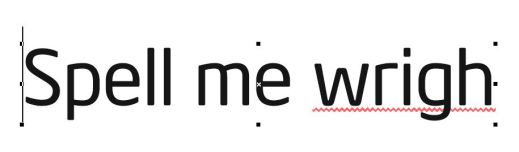
Because grammar and spelling checkers are software programs, they can’t read your mind or know your intentions. They also frequently cannot distinguish between correct and incorrect sentence structures and the use of words that sometimes confuse us humans. Below are 10 places in which your software may be suggesting errors rather than correcting them.
Eric, thanks for writing this article. [The comma after Eric’s name is correct because we are addressing him directly.]Dave, in the employee version, add an example here. [My checker suggested changing add to adds–wrong!]Lynn, may we have permission to print your material? [It suggested that I capitalize may as a month, which is incorrect, of course!]
When you write to Mark about the program in Kansas City, be sure he understands that it is in Missouri.
If you want to help employees improve their writing, use this guide.
Any files beginning with 000 need to be moved to the C drive. [Need is correct–not needs.]Thank you for letting us know about your shopping experience. [Know is correct–not knows!]The average number of words per sentence is 15 to 20. [The verb is is correct; are would be wrong.]
Convince or persuade?

Understand that some experts say that “persuade” and “convince” are synonyms that go back at least to the sixteenth century. The meanings are so closely knit that often one word serves as well as the other.
Grammar
After ‘persuade’ we use the structure
to + infinitive:
- I persuaded them to stay for another drink.
- He persuaded her not to take the job.
After ‘convince’ we cannot use a verb infinitive. We say ‘convince someone that‘:
- She convinced the police that she was telling the truth.
- He convinced her that it was the right thing to do.
Both of the above sentence would also be correct without ‘that’:
- She convinced the police she was telling the truth.
- He convinced herit was the right thing to do.
Meaning
Although Robert finally persuaded his girlfriend to move abroad with him, she was not fully convinced that it was the best thing to do.
In the example, Robert’s girlfriend was persuaded (to move) but was not convinced (that it was the correct decision). So, we can see that when we persuade someone to do something it doesn’t always mean that we have also convinced that person.
The teenager is convinced she can win. The boy was persuaded to run the 10-yard dash.
One more thing is worth mentioning about ‘persuade’ and ‘convince’. If we are absolutely sure about something, we say I’m convinced:
– Are you sure he’s innocent?
– Yes, I’m convinced. NOT I’m persuaded
Additional info
Some related words:
convincing (adjective) It was a convincing argument.
persuasive (adjective) Marta can be very persuasive when she wants.
persuasion (noun) He used his powers of persuasion.
When confronted with issues of word choice, I often find it helpful to consider the associations and connotations a word has in its different forms. A convincing person or argument is one that other people cannot help but agree with, whereas a persuasive person or argument is one that other people find compelling, but which leaves more room (in my mind) for the opportunity to disagree.
If you have been convinced, you have clearly and decisively changed your perspective. If you have been persuaded, then you have chosen to agree with those you previously disagreed with. In the latter case, it may not be so much that you’ve found an argument you agree with so much as you’re indulging someone who has appealed to you, either positively or negatively.
Prefer “convince” when the change of opinion must be definite or to deemphasize the role of whomever did the convincing. Prefer “persuade” to draw attention to either the arguments used or the individuals doing the arguing, to emphasize reluctance on the part of the persuaded, or when you need the word to contain more vowels.
Resources:
Photocredit: http://persuasionuvm.blogspot.com


Empower your writing
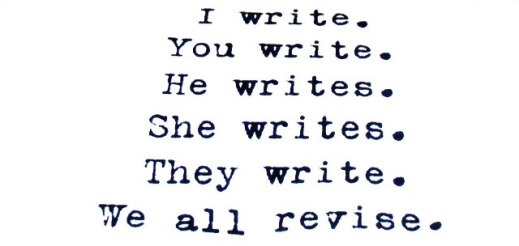
Stop using the dangling participle and misplaced modifiers
Both can seriously change the flow and meaning of your writing. It is important to make sure we qualify the intended words and not just any words in the sentence.
A participle is a verb that acts like an adjective and ends in –ing, such as swimming or cooking or diving. You name it! Any verb can be turned into a participle. A participial phrase is a phrase describing an action, “cooking on the stove”, “swimming in the ocean” and it is used to modify a noun in the sentence. A dangling participle modifies the unintended noun. Examples of dangling participles:
Misinterpreted: Cooking on the stove, Alice decided it was time to turn the vegetables.
It sounds as though Alice herself was being cooked on the stove.
Intended: Alice decided it was time to turn the vegetables that were cooking on the stove.
Misinterpreted: Sunburned and dehydrated, Mom decided it was time for the children to go into the house.
It sounds as though the Mom is sunburned and dehydrated.
Intended: Mom decided it was time for the children, who were sunburned and dehydrated, to go into the house.
A modifier is a word or a phrase that modifies something else in the sentence. Misplaced modifiers are modifiers that modify something else other than what you intended.
Examples of misplaced modifiers:
“I only walked my dog.” which means you did nothing but walk the dog. You did not feed or wash it, etc.
“I walked only my dog.” which means you did not walk anyone else such as your cat or your child, etc.
“I write mostly for other blogs.” which means that you write for other blogs most of the time but you may write for other sources as well.
“I mostly write for other blogs.” which means that your main activity is to write for other blogs. You may do other things too, such as sleep and eat but most of the time, you are writing for other blogs.
This is an excerpt from a book by Farnoosh Brock, available at Amazon.
Photo credit: http://maineschoolwritingcenters.blogspot.com/
Wishing you a wonderful Monday,
FREE business textbooks

Last week I came across a compelling online business library consisting of (almost) everything I need for the business writing, economics and related studies, including loads of wonderfully written textbooks.
And when I say “wonderfully written”, I mean that an earth, mortal human without previous phd degree could easily understand the essentials, then roll sleeves and get to work.
Over 800 textbooks written by professors
We currently offer over 800 textbooks. The books are in average around 200 pages long, and are being used as both primary and secondary literature.
All our books are written by highly respected professors from some of the best universities in the world and exclusively for bookboon.com.
There we have it, welcome:

Why is it free?
There is an excerpt of BookBoon.com mission and concept:
Bookboon.com publishes free and openly available eBooks for students and business professionals. The Books can be downloaded in PDF without registration. Our mission is that students should be able to go through university without having to pay for textbooks.
If you had a look, please share your experience in the comments below. Do you find it useful the way I did (I already finished two of the books on communication).
Have a magnificent Wednesday,
How to…?

Find out at: http://theoatmeal.com/comics/semicolon


AWARDS









 Just English