
Tips to Improve Your Business Vocabulary

Written by Lynn Gaertner-Johnston, Syntax Training
Apply these tips to improve your language:
The 7 Cs of Communication

Think of how often you communicate with people during your day. You write emails, facilitate meetings, participate in conference calls, create reports, devise presentations, debate with your colleagues… the list goes on.
We can spend almost our entire day communicating. So, how can we provide a huge boost to our productivity? We can make sure that we communicate in the clearest, most effective way possible.
This is why the 7 Cs of Communication are helpful. The 7 Cs provide a checklist for making sure that your meetings, emails, conference calls, reports, and presentations are well constructed and clear – so your audience gets your message.
According to the 7 Cs, communication needs to be:
- Clear.
- Concise.
- Concrete.
- Correct.
- Coherent.
- Complete.
- Courteous.
In this article, we look at each of the 7 Cs of Communication, and we’ll illustrate each element with both good and bad examples.
1. Clear
When writing or speaking to someone, be clear about your goal or message. What is your purpose in communicating with this person? If you’re not sure, then your audience won’t be sure either.
To be clear, try to minimize the number of ideas in each sentence. Make sure that it’s easy for your reader to understand your meaning. People shouldn’t have to “read between the lines” and make assumptions on their own to understand what you’re trying to say.
Bad Example
Hi John,
I wanted to write you a quick note about Daniel, who’s working in your department. He’s a great asset, and I’d like to talk to you more about him when you have time.
Best,
Skip
What is this email about? Well, we’re not sure. First, if there are multiple Daniels in John’s department, John won’t know who Skip is talking about.
Next, what is Daniel doing, specifically, that’s so great? We don’t know that either. It’s so vague that John will definitely have to write back for more information.
Last, what is the purpose of this email? Does Skip simply want to have an idle chat about Daniel, or is there some more specific goal here? There’s no sense of purpose to this message, so it’s a bit confusing.
Good Example
Let’s see how we could change this email to make it clear.
Hi John,
I wanted to write you a quick note about Daniel Kedar, who’s working in your department. In recent weeks, he’s helped the IT department through several pressing deadlines on his own time.
We’ve got a tough upgrade project due to run over the next three months, and his knowledge and skills would prove invaluable. Could we please have his help with this work?
I’d appreciate speaking with you about this. When is it best to call you to discuss this further?
Best wishes,
Skip
This second message is much clearer, because the reader has the information he needs to take action.
Talk nerdy to me
Let’s simplify legal jargon!
15 Phrases That Build Bridges Between People

Business is changing. The experts sure seem to think so. Every day, some new article hypes a brave new world of egalitarian openness and collaboration. That might be true if you work for yourself. For the rest of us, it’s still a winner-take-all, command-and-control world. Always has been, always will be. The experts may own the language, but not reality. When leaders feel threatened or the ink runs red, they rarely tap into their talent for solutions. More often, they cut communication and withdraw behind closed doors. Corporate culture can overcome many hurdles, but never human nature.
In reality, business has evloved little. Work still involves small victories and slow progress, often ambiguous and rarely permanent. That said, what drives workers has changed little too. Besides money, they want a voice. They dream of receiving a fair shot to make a difference. And they long to feel special. And all that starts with communication. These days, we’re taught that tone and body language are the message. But words – and what they signify – matter too. Over time, your character, competence, and caring may be revealed by your actions. In a micro world, it is the right words used at the right moments that spark conversations and build bridges between people.
1) Thank You: Common courtesy? Sure. But tell me this: When was the last time you forgot (or rejected) gratitude? Whether given in private or public, a sincere ‘thanks’ creates goodwill. Don’t forget your mother’s advice: “Say please.” People are always happier doing a favor than taking an order.
2) I Trust Your Judgment: Translation: “You have my permission. I believe in you. Now, go make it happen.” Feels pretty uplifting to hear that, doesn’t it? And I’ll bet you’d do almost anything to please someone who makes you feel that way. Your employees and peers are no different.
3) I Don’t Know: We don’t have all the answers. And it scares us to death. That’s a perfect point to start a dialogue…over facts and fears. Facing the unknown – and seeking assurances and answers – bonds people like nothing else. All you have to do is first admit what you don’t know.
4) Tell Me More: “I’m all ears.” It’s the ultimate conversation starter! When you signal that you’re open and intrigued, the other party will respond in kind. And who can resist flattery? Use phrases like “What do you think” or “What would you do” to acknowledge someone’s expertise. In doing so, you’re courting authentic suggestions, even if they challenge convention or skewer a sacred cow. If your interest is genuine, you may just fuel a productive exchange.
5) What I Hear You Saying Is: Ever wonder if someone has been listening to you? Be assured the person speaking to you is. So here’s a way to keep the ideas flowing. Step back and rephrase what someone says. In fact, vaguely distort or stray from it. This offers two benefits. It implies that you’re engaged, increasing the likelihood you’ll get more detail. It also helps you gauge the other person’s preparation, reasoning, and seriousness. It’s a win-win for everyone.
6) I’m On It: You’re giving your full attention. You’re saying, “Relax. Don’t worry about a thing. I’ll see to it personally.” That response can disarm just about anyone. To express a deeper commitment, use “You have my word.” This makes you more accountable to someone, conveying that you’re on board and will make it happen…whatever it takes.
7) How Else Can I Help You: It takes guts to speak up. People risk rejection, ridicule, or retaliation. Sure, you’ve discussed one issue. Chances are, this was just a test balloon to see how you’d react. This person probably wants to cover more; he’s just hesitant to ask. Make it easy on him. Extend the proverbial “what can I do” invitation to widen the conversation. And don’t be afraid to ask for help occasionally, either. People love to lend a hand. It provides purpose. When you’re humble and vulnerable, it humanizes you. It makes you one of them. And people trust those with whom they can identify.
8) I’ve Got Your Back: We’ve all made big mistakes. When we’ve recognized the gravity, the same question automatically pops up: “Am I getting fired for this?” It’s natural for co-workers and reports to imagine worst case scenarios. In those times, step in with a reassurance: “I’m not judging you. You’re going to get through this. You’re not alone. We’ll figure this out together. It’s going to be OK.”
9) My Pleasure: This subtle reminder reinforces a key point. You’re here to help others. You have all the time they need. And you’re happy to do it.
10) What If: Call it whatever you want: Imagination, wonder, inspiration, or vision. It’s that “why not” spirit that’s driven men and women to dream, create, and push limits. How often do you channel this force to hit it off with others? When was the last time you used a phrase like “How can we make this happen” or “Let’s try this out?” Go ahead. Open the floor to everyone. Put every option on the table. Don’t judge them based on budgetary, time, labor, or cultural considerations. Sure, most ideas won’t be feasible or relevant. But you’re seeking that nugget that makes your organization just a little more competitive and enjoyable. You can find the means another time.
11) Let Me Play Devil’s Advocate: Looking for a subtle way to critique? Turn the conversation into an exercise where you’re a detached party performing a function: Poking holes in the logic and plan of attack. Maybe you need to reel the other person back to the big picture. Maybe you want to direct him towards missing pieces, pros and cons, or alternatives. Either way, you use this strategy to stress test ideas without making the process personal.
12) Let Me Think About That: Yeah, it sounds like a cop out. And it is…sometimes. Fact is, we don’t always have the authority or expertise to make decisions. This phrase buys you time and breathing space. It intimates that you’re open-minded and the request merits consideration. Then, set a date and time for follow up so the other person knows you’re taking him serious.
13) Well Done: It’s a cliché, no doubt. Sometimes, it isn’t enough just to say thanks. People want to know what they did was great and why. They pour so much sweat and soul into their projects. They need more than recognition that a task or goal was completed. They need to know their work was special and had meaning to someone.
14) You’re Right: Want to get someone’s attention? Tell him that he’s right. Once you yield the high ground, it’s much easier for the other party to swallow that the right plan and sentiment can’t always overcome the absurdities and restraints we face every day.
15) I Understand: People have such an innate desire to connect. They long to know they’re not alone, seeking others who’ve been where they are – and have successfully made it through. Helping someone doesn’t always involve making suggestions or calls. It may just involve being there, paying attention to what a person has to say. Most times, that’s enough to show you understand.
What phrases do you use to make people feel more comfortable, motivated, and appreciated?
Via http://www.forbes.com
12 Most Rehumanizing Ways to Reword Dehumanizing Business Jargon

Can you tap a resource to execute the next project? Make sure you get it on their radar screen and really sweat the asset to get it done.
Business jargon is somewhat incomprehensible but always dehumanizing, demoralizing and demotivating. In offices all across the United States, we hear these phrases uttered at a constant pace. They make employees feel less than human and like a replaceable part in the massive corporate machine. However, it is simple enough to rehumanize that dehumanizing business jargon.
1. Resource
One of the most dehumanizing words in corporate jargon is resource. It can refer to a copy machine, paper clip or a person. If the resource being referred to breathes air, talks and has a name, it is best NOT to use the word resource.
2. Human capital
A close cousin to resource, but at least this phrase actually acknowledges that people are different than staplers. The people who spend 40+ hours a week working for a company are more valuable than this term implies. Without PEOPLE — a company cannot survive.
3. Tap
“We’d like to tap your brain for this upcoming project.” Ouch! You mean stick a metal object into my brain to drain out my intellect like I am a maple tree. No thanks, but I am happy to help you with the project.
4. It is what it is
This translates into I have completely given up on trying to solve this problem or I am completely powerless to help. Try listening, talking and coming up with solutions to see if you can change whatever “it is” into something better.
5. Radar screen
“You need to put this on your radar screen.” I don’t have a radar screen. Am I being promoted to an air traffic controller? How much harder could that be than playing Asteroids?
Instead, use “be aware of” or “take note” of the upcoming project.
6. Take it to the next level
“We need to take our deliverables to the next level.” Cool. Apparently, we are playing Super Mario Brothers at work and I didn’t realize it. I will get to the next level and save Princess Toadstool. Instead of this meaningless and overused phrase, outline the goals for the future and how the company is going to get there.
7. Bleeding edge
“There has to be bleeding edge thinking on this project.” This phrase just conjures up an image of a blood covered knife; not what I want to be thinking about if I want to push my thinking forward. How about using “creative thinking” or even “leading edge?” Anything is better than blood in the cubicle.
8. Execute
“How are we going to execute the project?” This overused word brings to mind more violent images and makes me wonder what did the poor project do to deserve this treatment? Try using the simple word “do” instead.
9. Bandwidth or cycles
“I’ll see if she has any bandwidth for these additional duties.” As much as I wish I was HAL 2000 refusing to open the pod bay doors, employees are not computers. Try instead this fantastic word – time. “I’ll see if she has the time for these additional duties.”
10. Sweat the asset
A company that gets every last drop of value out of its resources whether it be a person or machine. When referring to employees, let’s just stop using this phrase, ok? Thanks.
11. Cross pollination
“By bringing together the two teams, we are hoping you can cross-pollinate.” We are getting bees in the office? Isn’t than dangerous? Bees sting.
Oh, you mean — “share ideas.”
12. Flight risk
“I think Joe’s a flight risk.” Have you thought that Joe might be a flight risk because you talk about him like a prisoner? I’d want to quit too if I felt like an inmate at my job.
Rehumanizing dehumaninzing language in the office place is easy — just talk like a human being in plain language that builds relationships rather than demoralizes them.
Via http://12most.com
Do you speak ‘Project’?

Project management is a specialty, and it has its own language. Resistance is futile.
- Scope – It’s what has to be done. Always too general for some and too specific for others. Never right.
- Resources – Funding and people authorized for the project. Never enough and always in the wrong denominations.
- Schedule – How much time you have to get it all done. Never enough.
- Project Manager – You. The person responsible for everything, and in control of nothing.
- Sponsor – The one that wanted it in the first place. The one that shudders when you walk in because you always bring a problem, and give them way too many details.
- Customer – The group that want things their way.
- Vendor – The other group that wants things their way.
- Users – People addicted to the old way.
- Escalation – A process that defies gravity, and moves problems uphill.
- Documentation – The last task in a project, or later.
- Flowcharts – Cubicle art.
- Team – Your best friends. The group that, when asked who caused a problem, forms a circle and each person points to the left.
- Work Group – An oxymoron.
- Oxymorons – People that take more than their share of oxygen from a project.
- Project Plan – A deliverable assigned to the most annoying person on the project, who doesn’t recognize his or her work is done after the project has started and is going according to plan.
- Almost Done – Where you are after Day 1 of the project. What you say when the “80% done” answer quits working.
- RFI – Request for Information. A request for a customized marketing document.
- RFP – Request for Proposal. A request to take a monkey off a customer’s back.
- RFQ – Request for Qualifications. A request for a customized marketing document. A good source of boilerplate information for the RFP.
- RFQQ – Adds a price quote to the RFQ. Generally from a vendor that has too little information from a customer that has too little understanding. Binding.
- RFK – An important reminder that even the best project managers can find themselves in a bay of pigs.
- Proposal – A document of sweeping generalizations.
- Testing – What development is called after the development schedule has passed.
- Testing – What the end-users do when the testing schedule has passed. Sometimes called Post-implementation Support.
- Process Reengineering – Today’s processes, turned sideways.
- KPIs – Key Performance Indicators. Objective measures of failure, most often advocated by opponents. Never tracked.
- CSFs – Critical Success Factors. An early view of the blunders you will certainly make. Always tracked, but never called CSFs.
If this sounds familiar, you are an experienced project manager, undoubtedly overworked, underpaid and not appreciated. Get a dog.
Photo credit: http://www.study-habits.com
Empower your writing
Stop using the dangling participle and misplaced modifiers
Both can seriously change the flow and meaning of your writing. It is important to make sure we qualify the intended words and not just any words in the sentence.
A participle is a verb that acts like an adjective and ends in –ing, such as swimming or cooking or diving. You name it! Any verb can be turned into a participle. A participial phrase is a phrase describing an action, “cooking on the stove”, “swimming in the ocean” and it is used to modify a noun in the sentence. A dangling participle modifies the unintended noun. Examples of dangling participles:
Misinterpreted: Cooking on the stove, Alice decided it was time to turn the vegetables.
It sounds as though Alice herself was being cooked on the stove.
Intended: Alice decided it was time to turn the vegetables that were cooking on the stove.
Misinterpreted: Sunburned and dehydrated, Mom decided it was time for the children to go into the house.
It sounds as though the Mom is sunburned and dehydrated.
Intended: Mom decided it was time for the children, who were sunburned and dehydrated, to go into the house.
A modifier is a word or a phrase that modifies something else in the sentence. Misplaced modifiers are modifiers that modify something else other than what you intended.
Examples of misplaced modifiers:
“I only walked my dog.” which means you did nothing but walk the dog. You did not feed or wash it, etc.
“I walked only my dog.” which means you did not walk anyone else such as your cat or your child, etc.
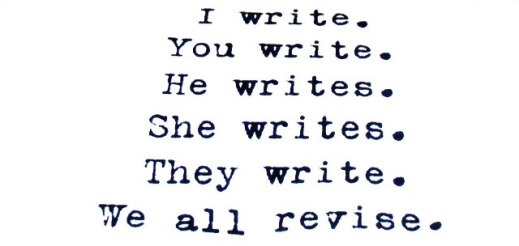
“I write mostly for other blogs.” which means that you write for other blogs most of the time but you may write for other sources as well.
“I mostly write for other blogs.” which means that your main activity is to write for other blogs. You may do other things too, such as sleep and eat but most of the time, you are writing for other blogs.
This is an excerpt from a book by Farnoosh Brock, available at Amazon.
Photo credit: http://maineschoolwritingcenters.blogspot.com/
Wishing you a wonderful Monday,

Quote of the day: mission

We’re not born with unlimited choices. We cannot be anything we want to be. We come into this world with a specific, personal destiny. We have a job to do, a calling to enact, a self to become. We are who we are from the cradle, and we’re stuck with it. Our job in this lifetime is not to shape ourselves into some ideal we imagine we ought to be, but to find out who we already are and become it. If we were born to paint, it’s our job to become a painter. If we were born to raise and nurture children, it’s our job to become a mother. If we were born to overthrow the order of ignorance and injustice of the world, it’s our job to realize it and get down to business.
The War of Art by Steven Pressfield and Shawn Coyne
20 quotes on IDEAs

1. “If at first, the idea is not absurd, then there is no hope for it.” – Albert Einstein
2. “If you do not express your own original ideas, if you do not listen to your own being, you will have betrayed yourself.” – Rollo May
3. “An idea that is not dangerous is unworthy of being called an idea at all.” – Oscar Wilde
4. “Ideas are like rabbits. You get a couple and learn how to handle them, and pretty soon you have a dozen.” – John Steinbeck
5. “The way to get good ideas is to get lots of ideas and throw the bad ones away.” – Linus Pauling
6. “There is one thing stronger than all the armies in the world, and that is an idea whose time has come.” – Victor Hugo
7. “Ideas won’t keep. Something must be done about them.” – Alfred North Whitehead
8. “A new idea is delicate. It can be killed by a sneer or a yawn; it can be stabbed to death by a quip and worried to death by a frown on the right man’s brow.” – Ovid
9. “You can have brilliant ideas, but if you can’t get them across, your ideas won’t get you anywhere.” – Lee Iacocca
10. “No grand idea was ever born in a conference, but a lot of foolish ideas have died there.” – F. Scott Fitzgerald
11. “Nearly every man who develops an idea works it up to the point where it looks impossible, and then he gets discouraged. That’s not the place to become discouraged.” – Thomas Edison
12. “It is the essence of genius to make use of the simplest ideas.” – Charles Peguy
13. “Nothing is more dangerous than an idea when it is the only one you have.” – Emile Chartier
14. “I had a monumental idea this morning, but I didn’t like it.” – Samuel Goldwyn
15. “An idea, like a ghost, must be spoken to a little before it will explain itself.” – Charles Dickens
16. “Why is it I always get my best ideas while shaving?” – Albert Einstein
17. “One’s mind, once stretched by a new idea, never regains its original dimensions.” – Oliver Wendell Holmes
18. “The air is full of ideas. They are knocking you in the head all the time. You only have to know what you want, then forget it, and go about your business. Suddenly, the idea will come through. It was there all the time.” – Henry Ford
19. “Capital isn’t that important in business. Experience isn’t that important. You can get both of these things. What is important is ideas.” – Harvey Firestone
20. “A mediocre idea that generates enthusiasm will go further than a great idea that inspires no one.” – Mary Kay Ash



AWARDS











 Just English