
Five Ways to Break Through Writers Block
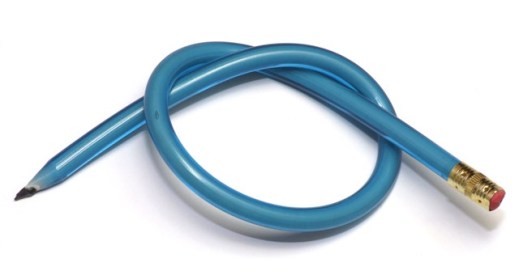
Bottom line is there are two types of writers: those who believe in writers block and those who don’t. Neither will deny the magic and energy that possesses an author when inspiration rears its mysterious head, but where their approach to writing differs is how the time is spent between those moments of inspiration.
Picture a blank page and what do you see? A canvas waiting to be filled with your words and your voice? Or a taunting emptiness that has you despairing over your first line?
When you are daunted by the incessant cursor winking at you from the shoreless white sea on your computer, one of the biggest mistakes a writer can make is succumbing to doubt.
Here are five practical tips that will snap you out of your daze and dissolve your writers block so that you can get back to the book you’re dying to write.
1) Just write!
Remember that nothing is perfect the first go-around, and if you let a blank sheet of paper intimidate you, you’re doomed from the beginning.
A book doesn’t write itself after all.
Take a walk and clear you head. Put on some music and brew some coffee. Then crack your knuckles, sit down in front of your computer and type out ideas, images – whatever pops into your head. Perhaps transcribe a dialogue between two friends, or something you overheard in line at the grocery store; before you know it, you’ll have painted an entire scene.
Maybe the language and tone aren’t your best ever, maybe the flow is all wrong and a section or two jumps into a completely different dimension, but now you have something real, something to work with and mold to your liking.
Even if out of an hour’s worth of work you keep only two or three sentences, you now have direction.
At the very least you now know what to avoid the next time you write.
2) Make an outline
Think about the beginning, middle and end of your project. Where are you starting, where are you headed and where would you like to end?
Jot down general ideas and details you plan to mention. Find a rhythm and progression to the entire project.
Reestablish your authority and realize that you can speak confidently on the subject you’ve chosen.
Once you have your bearings and a firm grip on your subject, you’ll move ahead with greater clarity and less stress.
3) Exercise
Writing exercises are another great way of dodging writers block. Sometimes all a writer needs is a little push in the right direction, and exercises can be just the ticket.
In addition to sharpening your writing skills and developing your own voice, exercises also get your creative juices flowing.
Take a few minutes, step away from the project that has you sweating, and write something for fun. These exercises can range anywhere from using a word randomly selected to detailing the dream you had the previous evening to the quirky how-did-this-green-umbrella-get-in-this-room explanations.
Long story short, you can’t write if you’re not enjoying yourself. Remember the reason you’re writing at all. Exercises can help you laugh, learn and realize your passion for writing all over again.
4) Practice makes perfect
Inspiration comes in spurts, but, like sleeping, you can regulate your cycle.
Set aside a specific hour or two each day devoted strictly to writing. Say you prefer writing in the morning. Then wake up an hour early, brew some coffee, and pull a chair up to your computer.
Before the end of the week, you’ll have a writing schedule ingrained in your daily routine, and you’ll discover that your creative groove makes its appearance at the time you’ve established.
5) Who’s listening?
Don’t forget that you’re writing for an audience – one that targets your writing for its authority and knowledge on a given subject.
Like you, your audience wants the whole story. They want the facts and scenes delivered to them without hesitation, without vagueness, but most importantly, without dilly-dallying. The last thing your audience wants is to be bored.
Writers block can be a good indication that you’re simply bored with what you’ve written, and you can safely deduce that your audience will be as well when they open your future book.
Go back and read what you’ve written. Where did the energy fizzle out and the tone take a nosedive? What was the most interesting part and what made it so invigorated? Your readers are smart people, not unlike yourself, and the flaws as well as the virtues you notice in your own writing will be the same ones your audience sees as well.
Some authors envision a single person to whom they are telling their story in order to give their audience a face, a listening ear and a doubtful expression.
For example, Kurt Vonnegut pictured himself writing to his sister when he started a book. For him, she acted as the devil’s advocate, frowning when a sentence sounded sour, laughing when a scene tickled her.
Don’t get bogged down by the incomprehensible size of your audience. Take a page from the Vonnegut book on writing and picture a friend, a family member, anyone you trust, and let them be your guide!
Meet Douglas Adams
One of my most favourite authors, Douglas Adams and his imagination beyond and above limits.
Meet him for a long talk, hear his voice and thoughts about parrots, monkeys and everything @
Fourty-two,
More about Douglas Adams:
Quote of the day

In literature, as in love, we are astonished at what is chosen by others.
Andre Maurois
How to write for the European Institutions

Are you an aspiring non-fiction author, or translator, maybe? Dreaming for a career in the European Parliament and/or Commission?
There you have two useful tools that will help you achieve the EU- English (house) style:

Writing in clear language can be difficult at the Commission, since much of the subject matter is complex and more and more is written in English by (and for) non-native speakers, or by native speakers who are beginning to lose touch with their language after years of working in a multilingual environment. We must nevertheless try to set an example by using language that is as clear, simple, and accessible as possible, out of courtesy to our readers and consideration for the image of the Commission.
-
How to write clearly
(16 pages, PDF)

- Think before you write
- Focus on the reader — be direct and interesting
- Get your document into shape
- KISS: Keep It Short and Simple
- Make sense — structure your sentences
- Cut out excess nouns – verb forms are livelier
- Be concrete, not abstract
- Prefer active verbs to passive — and name the agent
- Beware of false friends, jargon and abbreviations
- Revise and check
- Online EU drafting aids
Yours europeanly,
Quote of the day: Books are

Books are the quietest and most constant of friends;
they are the most accessible and wisest of counselors, and the
most patient of teachers.
– Charles William Eliot
Quote of the day
Never forget what you are, for surely the world will not. Make it your strength. Then it can never be your weakness. Armor yourself in it, and it will never be used to hurt you.
Tyrion Lannister – Game of Thrones


My Kiki-love

As I talked about reading as an essential part of my day (and life), I wanted to introduce you to my BFF.
- Name: Kiki
- Breed: Kindle Keybord (a.k.a. “3”) of the Electronic Readers
- Age: About 9 months
Some birthday pictures (happy delivery) 🙂
This is not a review, pro(s) and con(s), etc.
All I have to say is that I love my Kiki to pieces. It’s compact, yet I can have my 150 books with me the whole time . It’s slim and good looking and oh-so-smart with all that features and functions for bookmarking, taking notes, making clippings and easy information sharing. Buy and download a book in less than a minute (with build-in WiFi), use the build-in dictionary with just one click…
I could only be sorry that I haven’t had a Kiki during my studies back in the university, it would have spared me so much efforts, especially for my literature classes.
Not that I don’t like the smell of books, mind you! But having a Kindle does not imply that you will stop for ever and the whole eternity your other readings. It means that you will have one more love.
If you are having second thought about purchasing a Kindle, don’t. Shoot away, it is worth it. Every cent!
Don’t ask me about the page, there are just percents here,
Reading equals life

Passion. Hunger. Need.
I wake up and one motion I do – a book I reach out for. Eyes still closed, I caress its cover, my door to imagination. The first thing in morning, the last thing at night. More than love. Sometimes an obsession. Reading is what gives me the drive, the motivation, the strive to live. Another world I submerge into. Hundreds of thousands of billions of ideas, of minds, of stories. In some of them I may find just a teeny-tiny piece of useful information, others could read my mind and expose me head to toe, naked to them, as if they had been written for myself and only me in the world. Good books tell us what we already know but hesitate to confess – our deepest concerns, fears, loves and hopes. Our selves.
I dream about libraries and the soft, vanilla-like scent of books, centuries talks about life and the adventure of living and loads of dedicated to writing souls to show you the way.
I do not care about night clubs or posh meeting places, as long as I had a nice reading, blanket (and a cuppa tea).
Take books away from me and I will feel lost and confounded. Alone. Deserted.
Bring them back and I will breathe and smile again.
What does reading mean to you?
Shhh, I am taking a book,
so please write silently
Create music with words

This sentence has five words. Here are five more words. Five-word sentences are fine. But several together become monotonous. Listen to what is happening. The writing is getting boring. The sound of it drones. It’s like a stuck record. The ear demands some variety. Now listen.
I vary the sentence length, and I create music. Music. The writing sings. It has a pleasant rhythm, a lilt, a harmony. I use short sentences. And I use sentences of medium length. And sometimes, when I am certain the reader is rested, I will engage him with a sentence of considerable length, a sentence that burns with energy and builds with all the impetus of a crescendo, the roll of the drums, the crash of the cymbals–sounds that say listen to this, it is important.
Gary Provost, quoted in Roy Peter Clark’s Writing Tools
TBC…
Commencing my Monday with (more than) five words,


AWARDS









 Just English