

Seven Tips for Communicating Data

Written by Lynn Gaertner-Johnston, Syntax Training
After you have worked hard to collect meaningful data, the big challenges are how and how much to communicate. Consider these tips when you work on your next report or presentation that includes data.
- Focus first on your message, not on the numbers.
When planning your communication, focus first on the big idea or points you want to make. Then incorporate the data that will help your audience understand and appreciate your points. Be sure your big idea gets center stage, not the numbers. - Explain the data.
Numbers mean nothing on their own. They need interpretation. Avoid asking readers or your audience to “review the attached spreadsheets.” Why should they review them? Which numbers should they pay attention to and why? What do the numbers indicate? - Put data in context.
Make it clear whether numbers are positive, negative, or neutral. If you tell a sales rep that she visited an average of six prospects per day, compare that number to the goal number of prospects. If a client walks 5500 steps in a day, state whether 5500 is the magic healthy number or only halfway there. If expenses are 18 percent over income, say why the reader should care. Explain that the account balance will be €0 by 2018 if nothing changes. - Paint a picture with your numbers so people can see them.
Even simple expressions like “a tenfold increase” or “a 30 percent drop” can seem vague unless your audience can see them. If numbers have decreased dramatically over a decade, do not use words and numbers alone. In a bold-colored graph, show the deep drop year by year, month by month over 10 years.

If your numbers are so large as to be abstract, paint them in recognizable mental pictures such as an area as large as Italy or a distance of 100 Greyhound buses. (Think of your audience when you choose the image.) How hot is 158 degrees Fahrenheit? Hot enough to fry an egg on the sidewalk.
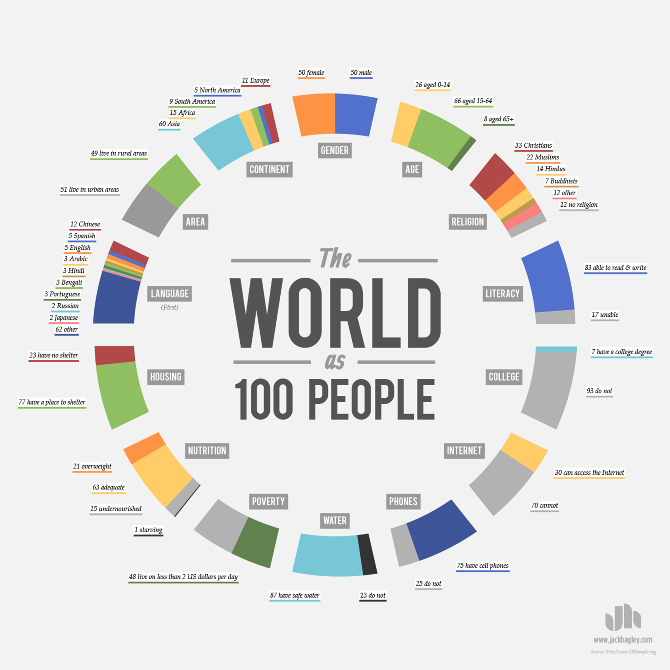
Or show the numbers reduced to their essence. Jack Hagley’s graphic “The World as 100 People” (www.jackhagley.com/The-World-as-100-People) presents the world as though it were only 100 people. For instance, 83 of the world’s 100 people are able to read and write; 17 are not.
- Highlight important numbers.
A wall of numbers is as intimidating as a wall of text. Pull out essential numbers and focus on them. If you are presenting financial data, show just a small portion of it at a time on a slide or a page–just the portion you are discussing now. If you refer to and show just a small part, your audience will not say, “Where are you?” and “What are you talking about?” And always render numbers in a large enough font that you do not have to apologize for it.
Make it easy for your readers to find important numbers. If a client has asked for your fee, for example, don’t bury the number in a paragraph. Instead, render the number alone on a line or as part of a short heading, like this:
Your investment: US$19,000
- Prominently display the legends for tables and charts of numbers.
Ensure that your audience will know instantly that 3000 indicates 3,000,000 and that your balance is positive rather than negative. Use abbreviations such as K and M only if you are certain your readers understand them. (To some people, M means thousand; to others, it means million.) - Use only the essential, compelling numbers in the body of your document.
If numbers weigh down your document, your readers may forget your main point. So move most of the supporting tables, lists, charts, and graphs to the appendices. In a presentation, hold back some slides of data, and show them only upon request. Remember: The numbers are not the message; they serve the message.
If you think of your communication as music, your most important message comes through the soloist. The numbers are the accompanists. They play an essential role, but they should never drown out the soloist. If they do, your communication will not reach and change your audience.

Simple but Intelligent Word Choices
#10: Lucid

Definition:very clear and easy to understand; able to think clearly Words It Might Replace:clear, logical, orderly (describing an explanation); rational (describing a person). The word’s original meaning, by the way, is “suffused with light.” Example:“But instead of a lucid narrative explaining what happened when the economy imploded in 2008, why, and who was to blame, the report is a confusing and contradictory mess…” – Frank Partnoy, The New York Times, January 29, 2011 |
#9: Austere

Definition:marked by rigorous restraint, simplicity, or self–denial Words It Might Replace:simple or plain, especially when you’re describing something that is strict or without comfort Example:“This is the austere beauty of the desert: limitless vistas, clear skies, dramatic topography, an unforgiving environment for life of any kind.” – James Fallows, The Atlantic, October 2008 |
#8: Volatile

Definition:likely to change in a very sudden or extreme way; having or showing extreme or sudden changes of emotion Words It Might Replace:unstable; emotional; unpredictable Example:“Prosecutors want to demonstrate that Bonds treated those around him in an abusive and hostile manner and that his volatile nature was also the result of steroid use.” – Christian Red, New York Daily News, March 17, 2011 |
#7: Stoic

Definition:showing no emotion especially when something bad is happening Words It Might Replace:unemotional; uncomplaining; cold Example:“Hockey also gives normally staid, stoic and polite Canadians license to be aggressive.” – Stuart Weinberg, Wall Street Journal (wsj.com), November 30, 2010 |
#6: Caustic

Definition:marked by sharp or biting sarcasm; very harsh and critical Words It Might Replace:critical, hostile, snarky; nasty; sarcastic Example:“This world loves bickering buddies…. [T]here’s plenty of fondness for comedies built around caustic and amusing back–and–forths between two people that, at the drop of a hat, either want to kill each other or cuddle.” – Christopher Bell, blogs.indiewire.com, April 27, 2011 |
#5: Maudlin

Definition:showing or expressing too much emotion especially in a foolish or annoying way Words It Might Replace:sappy; schmaltzy; overly emotional Example:“His daughter’s account of his final days manages to capture the emotion without becoming maudlin.” – Glenn C. Altschuler, NPR.org, April 28, 2011 |
#4: Lurid

Definition:causing horror or revulsion; involving sex or violence in a way that is meant to be shocking Words It Might Replace:shocking; sensational; gruesome Example:“Like articles about drug busts, this sort of story [about a prostitution ring] produces lurid, boldface headlines that catch the reader’s eye.” – Mark Drought, Stamford Advocate, April 13, 2011 |
#3: Glib

Definition:said or done too easily or carelessly; marked by ease in speaking to the point of being deceitful Words It Might Replace:careless; insincere Example:“A time may come when Tiger Woods will be glib and ebullient and full of witty observations about golf. But I doubt it.” – David Jones, pennlive.com, April 15, 2011 |
#2: Cavalier

Definition:having or showing no concern for something that is important or serious Words It Might Replace:thoughtless or careless, especially when you’re describing a disregard for consequences Example:“Many took issue with [Kristen] Stewart’s rather cavalier use of the term [“rape”], even if it was used in a metaphorical sense…” – Michael Jordan, BlackBook, June 4, 2010 |
#1: Demure
 Long and exotic words (like defenestration or sesquipedalian) are often more fascinating than useful. By comparison, this list offers words that can enrich a conversation without sounding ridiculous. Long and exotic words (like defenestration or sesquipedalian) are often more fascinating than useful. By comparison, this list offers words that can enrich a conversation without sounding ridiculous.
Definition:not attracting or demanding a lot of attention; not showy or flashy; quiet and polite Words It Might Replace:modest; unassuming; shy; coy Example:“As William and Kate sang prayers from the specially designed hymn sheets, the two sisters looked on unassumingly. But despite their demure appearance, rumours even began to surface today that one of the women was a secret ‘ninja nun’ intended to protect the Royal couple by pouncing on any intruders.” – Daily Mail, May 1, 2011 |
Read more…
Talk English by colors
WHITE
|
 |
|||||
| a white lie | a harmless lie/ a lie to spare someone’s feelings | |||||
| white noise | static noise | |||||
| white as a sheet | scared, sick, surprised | |||||
| white as a ghost | scared | |||||
| white-collar | related to “desk jobs” | |||||
| a white flag | surrender | |||||
| to whitewash something | to mask the negative parts | |||||
| white wine | wine from green or yellow grapes | |||||
| a white Christmas | snow on Christmas day | |||||
| a white wedding | a traditional western-style wedding where the bride wears a white gown | |||||
| a white person | a person of Caucasian race | |||||
| white-hot | extremely hot OR popular | |||||
| a white paper | an authoritative report on a issue | |||||
| a white elephant | a useless knick-knack OR an expensive, useless thing | |||||
| white as the driven snow | innocent (often used sarcastically about corruption) | |||||
| white with rage | extremely enraged | |||||
| to bleed someone white | to take everything someone has, esp. money | |||||
| showing the white feather | acting cowardly | |||||
| a white-knuckle ride | a dangerous, nerve-wracking, scary ride | |||||
| that’s mighty white of you (old-fashioned) | that’s good of you | |||||
| lily-white | unmistakably Caucasian OR blameless, goodly | |||||
| white horses (surfing) | patches of white foam made by breaking waves | |||||
| white trash (American) | (offensive) uneducated, socio-economically disadvantaged Caucasian people | |||||
| whiter than white (British) | righteous, innocent | |||||
BLACKa white pointer (Australian) |
 a topless female sunbather a topless female sunbather |
|||||
| to blackmail someone | to threaten to reveal secrets unless payment is made | |||||
| to black out | to lose consciousness | |||||
| a blackout | a loss of electricity in an area | |||||
| the blackout | during wartime, extinguishing or covering lights | |||||
| black magic / the black arts | magic used for malevolent purposes | |||||
| the pot calling the kettle black | someone criticizing someone else for a quality they themselves possess | |||||
| the black market | illegal/underground sales and purchases | |||||
| little black book | book of contacts, esp. past or potential dates | |||||
| a black sheep | the outcast or disgrace in a group | |||||
| black gold | oil / petrolium | |||||
| black tie | formal clothing e.g. a tuxedo | |||||
| black humor | jokes about death or illness | |||||
| a black day | a day when something bad happens | |||||
| to be in black and white | to be written down officially | |||||
| to be black and white (a situation) | to be clear | |||||
| in the black | profitable | |||||
| a black mood | a bad, grumpy mood | |||||
| a black eye | a bruised eye | |||||
| to blacklist someone | to prevent someone from being hired | |||||
| to blackball someone | to shut someone out from group participation | |||||
| black and blue | bruised | |||||
| a black look | an angry/disapproving facial expression | |||||
| as black as night | very dark black | |||||
| pitch black | very dark black | |||||
| a black person | a person of African heritage | |||||
| black ops | extralegal covert activity, done in the dark (military/politics) | |||||
| black-hearted | cruel, evil, mean | |||||
| a black mark | an indication of wrongdoing | |||||
| to blacken someone’s name | to suggest/indicate a person’s wrongdoing | |||||
| the Black Death | The Bubonic Plague | |||||
| a black rat (British) | a traffic police officer | |||||
| Black Friday (U.S.) | The day after American Thanksgiving when many stores have sales | |||||
| the black dog (Irish) | a bad mood | |||||
| beyond the black stump (Australian) | the back of nowhere, far from anything | |||||
RED
in the red |
 unprofitable OR negative financial balance, owing money unprofitable OR negative financial balance, owing money |
|||||
| a redhead | a person with orange-colored hair | |||||
| red light district | area with prostitutes | |||||
| to see red | to be furious | |||||
| red with rage | furious | |||||
| to turn/go red | become embarrassed | |||||
| a red herring | a false clue | |||||
| to paint the town red | to dine, dance, experience fun in a town or city | |||||
| a red flag | a signal that something is wrong | |||||
| roll out the red carpet | give a big welcome | |||||
| red tape | unnecessary/excessive bureaucracy | |||||
| not one red cent | no money at all | |||||
| a red letter day | a special day | |||||
| a scarlet woman | a sinful woman | |||||
| scarlet fever | an infection with group A streptococcus bacteria. | |||||
| red-hot | very hot OR very popular | |||||
| red card | a sanction for a soccer player | |||||
| red alert | a serious warning of danger | |||||
| a red-blooded male | a virile, manly male person | |||||
| like a red rag/flag to a bull | provoking/aggravating anger | |||||
| red (adjective) | communist | |||||
| bleed red ink (British) | debt | |||||
| red in tooth and claw (British) | the wild, violent aspect of the natural world | |||||
| redshirting (U.S.) | delaying an athlete’s participation in sports order to lengthen his/her period of eligibility | |||||
| a red state (U.S.) | a state whose residents are politically more Republican | |||||
| a redneck (U.S.) | an uneducated, rural white American | |||||
| a red-bone (U.S.) | a light-skinned black woman | |||||
| the red scare (U.S.) | (historical) the worry that society would be infiltrated by communists and communism | |||||
| the red eye (U.S.) | the overnight flight between west and east coast | |||||
GREENgreen with envy |
 very envious very envious |
|||||
| the green-eyed monster | jealousy | |||||
| to give the green light | to give approval to proceed | |||||
| to be green (in a position) | to be inexperienced, a rookie | |||||
| to be green (policy) | to be environmentally aware | |||||
| the green room | room in a theater or studio where guests/performers wait to go on | |||||
| to turn green | to be nauseous | |||||
| green around the gills | sick-looking | |||||
| a greenbelt | an area of nature around a city | |||||
| greens | vegetables | |||||
| a green | a golf course | |||||
| a greengrocer | a person/store that sells vegetables & fruit | |||||
| the grass is always greener on the other side | other people’s possessions/situations always seem better than your own | |||||
| greener pastures | a better situation | |||||
| to greenwash something | to deceptively make practices/policies seem more environmentally friendly | |||||
| little green men | stereotypical/humorous description of space aliens | |||||
| as sure as God made little green apples | very certain | |||||
| colorless green ideas sleep furiously | (Linguistics) Noam Chomsky’s oft-quoted example of a sentence with good grammar but no meaning | |||||
| to have green fingers (British) | to be good with plants/gardens | |||||
| to have a green thumb (U.S.) | to be good with plants/gardens | |||||
| a greenie (Australian) | an environmentally aware person | |||||
| a green card (U.S.) | legal residency status | |||||
| a greenhorn (U.S.) | an inexperienced or young person | |||||
| greenbacks (U.S.) | dollars | |||||
YELLOWyellow |
 cowardly cowardly |
|||||
| a yellow streak | cowardice | |||||
| yellow-bellied | cowardly | |||||
| yellow journalism | disreputable, sensationalistic journalism | |||||
| a yellow card | (soccer) to give someone a first warning | |||||
| the yellow peril | (offensive, archaic) the fear that Asian people will outnumber/displace Caucasian people | |||||
| yellow fever | an acute viral haemorrhagic disease | |||||
| yellow fever (Nigerian slang) | traffic police | |||||
| a yellow dog Democrat (U.S.) | a voter who always votes Democrat in every election | |||||
BLUEout of the blue |
 suddenly, unexpectedly suddenly, unexpectedly |
|||||
| a bolt from the blue | a sudden/unexpected thing | |||||
| to be blue | to be sad | |||||
| a blue funk | a feeling of melancholy | |||||
| the blues | sadness OR a 3 chord style of music | |||||
| once in a blue moon | infrequently | |||||
| blue-collar | related to manual labor or the working class | |||||
| a blue blood | an aristocratic person | |||||
| to talk a blue streak | to talk a lot | |||||
| to turn blue | to have difficulty breathing | |||||
| blue with cold | feeling very cold | |||||
| until you’re blue in the face | having lost your patience | |||||
| blue chip stock | stock of an established/financially sound company | |||||
| working blue | performing using foul language | |||||
| a blue movie | a pornographic film | |||||
| a blueprint (for something) | a design, a guide | |||||
| true blue | faithful | |||||
| blue on blue | in military: friendly fire | |||||
| into the wide/wild blue yonder | to an unknown/faraway place | |||||
| blue balls (lewd) | male sexual frustration due to unfulfilled sexual urges | |||||
| to turn the air blue | to swear a lot | |||||
| between the devil and the deep blue sea | a dilemma | |||||
| the boys in blue | the police | |||||
| the thin blue line | the police | |||||
| a blue state (U.S.) | a state whose residents are politically more Democrat | |||||
| a blue (British) | a Tory | |||||
| to scream blue murder (British) | to express yourself angrily | |||||
| a blue-eyed boy (British) | a male who can do no wrong, who is favored by authority | |||||
| having a blue (Australian) | having a fight | |||||
| make a blue (Australian) | make a mistake | |||||
BROWNa brown-noser |
 a sycophant a sycophant |
|||||
| in a brown study | being contemplative; daydreaming | |||||
| browned off (British) | annoyed | |||||
PURPLEpurple prose |
 flowery, romantic writing flowery, romantic writing |
|||||
| born in the purple | born into a high ranking/aristocratic family | |||||
| the Purple Heart (U.S.) | a U.S. military honor badge | |||||
| a purple patch (British) | a period of exceptionally high achievement | |||||
ORANGEagent orange |
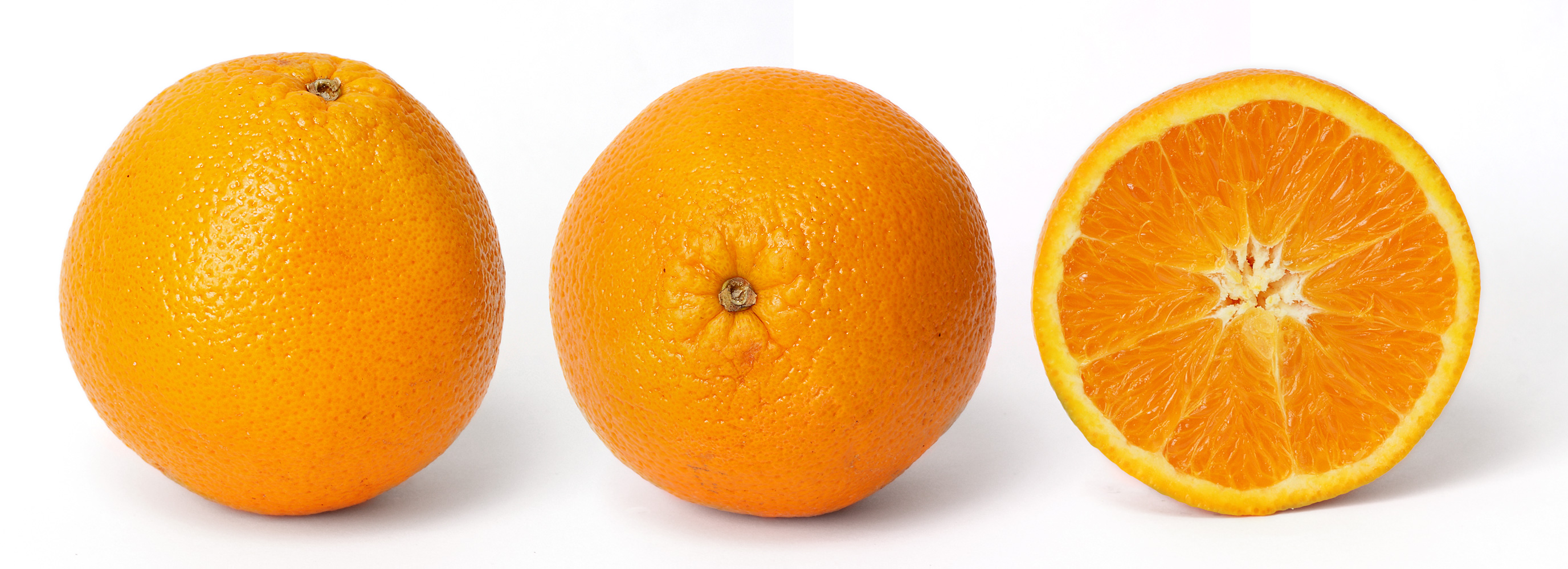 a defoliant used in herbicidal warfare a defoliant used in herbicidal warfare |
|||||
| Orangemen (Irish) | Protestant fraternal organization | |||||
PINKin the pink of health |
 very healthy very healthy |
|||||
| tickled pink | very pleased | |||||
| a pinko | a communist | |||||
| to see the world through rose-colored glasses | to see the world through an optimistic filter | |||||
| rosy | positive, optimistic, | |||||
| to get a pink slip | to be fired | |||||
| the pink pound (British) | consumer spending by gay people | |||||
GREYgrey area |
 unclear unclear |
|||||
| grey matter | the brain | |||||
| to give someone grey hairs | to try someone’s patience | |||||
| gray market | sale of products via nonstandard distribution channels or at an unofficial price | |||||
| grey nomads (Australian) | retirees who travel around the country | |||||
| the silver screen | the movies | |||||
GOLDENa golden boy |
 a well-regarded, successful man a well-regarded, successful man |
|||||
| a golden handshake | monetary incentive to join a company | |||||
| a golden parachute | money given to an executive leaving a company | |||||
| golden ears | great listening ability to discern quality or commerciality | |||||
| a golden shower (lewd) | urinating on a sexual partner | |||||
| a golden mean | the desirable middle (between extremes of excess and deficiency) | |||||
COLORoff-color |
 inappropriate, crude inappropriate, crude |
|||||
| to show your true colors | to reveal your true self or feelings | |||||
| a colorless person | a boring person | |||||
| colorful (e.g. tale, history, life) | event-filled and interesting | |||||
| colorful language | vivid or expletive-filled language | |||||
| to pass with flying colors | to do very well | |||||
| local color | having typical characteristics of the local area | |||||
| color commentary | facts & comments about athletes during a broadcast | |||||
| a horse of a different color | a completely different thing/idea | |||||
| a country’s colors | the colors of a national flag |
SOURCE
Contronyms: What did you mean by deceptively smart?
A synonym is a word that means the same as another.
Necessary and required are synonyms.

An antonym is a word that means the opposite of another.
Wet and dry are antonyms.
While synonyms and antonyms are not in themselves interesting, the complexities and irregularities of the English language sometimes make synonyms and antonyms interesting to explore. Many complexities result from words having multiple definitions.
A trivial example is a word with synonyms that aren’t synonyms of each other, the word beam, for example, having the synonyms bar and shine.
Similarly, some words have antonyms that are neither synonyms nor antonyms of each other but completely unrelated: the word right, for example, having the antonyms wrong and left.
A more interesting paradox occurs with the word groom, which does not really have an antonym in the strictest sense but has an opposite of sorts in the word bride, which can be used as a prefix to create a synonym, bridegroom.

The word contronym (also antagonym) is used to refer to words that, by some freak of language evolution, are their own antonyms. Read More…
168 Color terms in English

Compiled by Stephen Chrisomalis
This list contains 168 definitions of obscure colour terms using combinations of ‘normal‘ colours of the rainbow and descriptive adjectives; e.g. cardinal = deep scarlet red; russet = reddish brown. Note that most English speakers outside the U.S. spell colour with the added British ‘u’ rather than the American version color. Don’t worry if the colours (or colors) in your universe don’t match up with the definitions I’ve given for these words, though – I’ve been known to have skewed perceptions of reality … Read More…
173 foreign words and phrases in English language
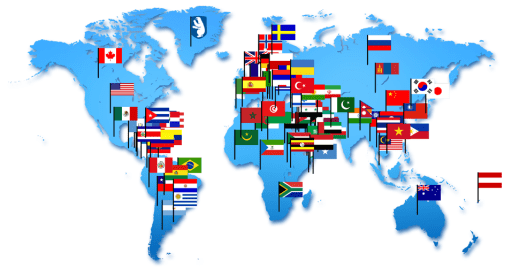
Over the centuries the English language has assimilated words and phrases from a variety of other languages. In context, those listed here are often printed in italics. Read More…


Another 20 “Forgotten” Words That Should Be Brought Back
Languages are living things that shift and evolve over time. If you look at the history of the English language, from Anglo Saxon through the Great Vowel Shift to what we consider Standard English today, you’ll notice that it has undergone some spectacular changes over the centuries. Some basic words have stuck around through the ages, like “father”, “house”, “egg”, “boat” and so on, but just as new words developed over time, other words were discarded along the way.
Many others from Shakespeare’s time through to the early 20th century have fallen out of common usage, and we are undoubtedly the poorer for it. Here are 20 words that could only serve to add a bit more colour to our daily lives if they happened to come back into regular use.
1. Bunbury
noun
An imaginary person whose name is used as an excuse to some purpose, especially to visit a place.
“Auntie Jane the cottage dweller” was my go-to bunbury whenever I wanted to take a day off to go play in the forest. Read More…


AWARDS









 Just English