
The Politically Incorrect Etymologies of 10 Words and Phrases
At various moments in its life, a word will hop languages, change meanings, travel through sinister moments and land in pleasant ones. But no matter how many times it’s superimposed, and how far it gets from its original source, a word doesn’t let go of its memories easily. Here are 11 modern English words with socially insensitive origins.

1. Hysteria (n.) – a wild, irrational eruption of fear or emotion
Hysteria begins in the womb, or so thought the medical scholars of the 1610s, who named the condition after the Latin hystericus, meaning “of the womb.” Those who’ve studied the Victorian era, or read The Awakening in high school, may know that the go-to prognosis of the time for just about every female’s symptom from the occasional hissy fit to chronic seizures was a pesky wayfaring uterus. The condition was thought to be caused by sexual frustration and cured by intercourse or pelvic massage, the latter often performed by physicians and midwives. When doctors finally got fed up with the tedious task in the late 19th century, the personal vibrator was created to take their place. Read More…
The 100 Most Beautiful Words in English
| Ailurophile | A cat-lover. |
| Assemblage | A gathering. |
| Becoming | Attractive. |
| Beleaguer | To exhaust with attacks. |
| Brood | To think alone. |
| Bucolic | In a lovely rural setting. |
| Bungalow | A small, cozy cottage. |
| Chatoyant | Like a cat’s eye. |
| Comely | Attractive. |
| Conflate | To blend together. |
| Cynosure | A focal point of admiration. |
| Dalliance | A brief love affair. |
| Demesne | Dominion, territory. |
| Demure | Shy and reserved. |
| Denouement | The resolution of a mystery. |
| Desuetude | Disuse. |
| Desultory | Slow, sluggish. |
| Diaphanous | Filmy. |
| Dissemble | Deceive. |
| Dulcet | Sweet, sugary. |
| Ebullience | Bubbling enthusiasm. |
| Effervescent | Bubbly. |
| Efflorescence | Flowering, blooming. |
| Elision | Dropping a sound or syllable in a word. |
| Elixir | A good potion. |
| Eloquence | Beauty and persuasion in speech. |
| Embrocation | Rubbing on a lotion. |
| Emollient | A softener. |
| Ephemeral | Short-lived. |
| Epiphany | A sudden revelation. |
| Erstwhile | At one time, for a time. |
| Ethereal | Gaseous, invisible but detectable. |
| Evanescent | Vanishing quickly, lasting a very short time. |
| Evocative | Suggestive. |
| Fetching | Pretty. |
| Felicity | Pleasantness. |
| Forbearance | Withholding response to provocation. |
| Fugacious | Fleeting. |
| Furtive | Shifty, sneaky. |
| Gambol | To skip or leap about joyfully. |
| Glamour | Beauty. |
| Gossamer | The finest piece of thread, a spider’s silk |
| Halcyon | Happy, sunny, care-free. |
| Harbinger | Messenger with news of the future. |
| Imbrication | Overlapping and forming a regular pattern. |
| Imbroglio | An altercation or complicated situation. |
| Imbue | To infuse, instill. |
| Incipient | Beginning, in an early stage. |
| Ineffable | Unutterable, inexpressible. |
| Ingénue | A naïve young woman. |
| Inglenook | A cozy nook by the hearth. |
| Insouciance | Blithe nonchalance. |
| Inure | To become jaded. |
| Labyrinthine | Twisting and turning. |
| Lagniappe | A special kind of gift. |
| Lagoon | A small gulf or inlet. |
| Languor | Listlessness, inactivity. |
| Lassitude | Weariness, listlessness. |
| Leisure | Free time. |
| Lilt | To move musically or lively. |
| Lissome | Slender and graceful. |
| Lithe | Slender and flexible. |
| Love | Deep affection. |
| Mellifluous | Sweet sounding. |
| Moiety | One of two equal parts. |
| Mondegreen | A slip of the ear. |
| Murmurous | Murmuring. |
| Nemesis | An unconquerable archenemy. |
| Offing | The sea between the horizon and the offshore. |
| Onomatopoeia | A word that sounds like its meaning. |
| Opulent | Lush, luxuriant. |
| Palimpsest | A manuscript written over earlier ones. |
| Panacea | A solution for all problems |
| Panoply | A complete set. |
| Pastiche | An art work combining materials from various sources. |
| Penumbra | A half-shadow. |
| Petrichor | The smell of earth after rain. |
| Plethora | A large quantity. |
| Propinquity | An inclination. |
| Pyrrhic | Successful with heavy losses. |
| Quintessential | Most essential. |
| Ratatouille | A spicy French stew. |
| Ravel | To knit or unknit. |
| Redolent | Fragrant. |
| Riparian | By the bank of a stream. |
| Ripple | A very small wave. |
| Scintilla | A spark or very small thing. |
| Sempiternal | Eternal. |
| Seraglio | Rich, luxurious oriental palace or harem. |
| Serendipity | Finding something nice while looking for something else. |
| Summery | Light, delicate or warm and sunny. |
| Sumptuous | Lush, luxurious. |
| Surreptitious | Secretive, sneaky. |
| Susquehanna | A river in Pennsylvania. |
| Susurrous | Whispering, hissing. |
| Talisman | A good luck charm. |
| Tintinnabulation | Tinkling. |
| Umbrella | Protection from sun or rain. |
| Untoward | Unseemly, inappropriate. |
| Vestigial | In trace amounts. |
| Wafture | Waving. |
| Wherewithal | The means. |
| Woebegone | Sorrowful, downcast. |
The 100 Funniest Words in English

| Abibliophobia | The fear of running out of reading material. |
| Absquatulate | To leave or abscond with something. |
| Allegator | Some who alleges. |
| Anencephalous | Lacking a brain. |
| Argle-bargle | A loud row or quarrel. |
| Batrachomyomachy | Making a mountain out of a molehill. |
| Billingsgate | Loud, raucous profanity. |
| Bloviate | To speak pompously or brag. |
| Blunderbuss | A gun with a flared muzzle or disorganized activity. |
| Borborygm | A rumbling of the stomach. |
| Boustrophedon | A back and forth pattern. |
| Bowyang | A strap that holds the pants legs in place. |
| Brouhaha | An uproar. |
| Bumbershoot | An umbrella. |
| Callipygian | Having an attractive rear end or nice buns. |
| Canoodle | To hug and kiss. |
| Cantankerous | Testy, grumpy. |
| Catercornered | Diagonal(ly). |
| Cockalorum | A small, haughty man. |
| Cockamamie | Absurd, outlandish. |
| Codswallop | Nonsense, balderdash. |
| Collop | A slice of meat or fold of flab. |
| Collywobbles | Butterflies in the stomach. |
| Comeuppance | Just reward, just deserts. |
| Crapulence | Discomfort from eating or drinking too much. |
| Crudivore | An eater of raw food. |
| Discombobulate | To confuse. |
| Donnybrook | An melee, a riot. |
| Doozy | Something really great. |
| Dudgeon | A bad mood, a huff. |
| Ecdysiast | An exotic dancer, a stripper. |
| Eructation | A burp, belch. |
| Fard | Face-paint, makeup. |
| Fartlek | An athletic training regime. |
| Fatuous | Unconsciously foolish. |
| Filibuster | Refusal to give up the floor in a debate to prevent a vote. |
| Firkin | A quarter barrel or small cask. |
| Flibbertigibbet | Nonsense, balderdash. |
| Flummox | To exasperate. |
| Folderol | Nonsense. |
| Formication | The sense of ants crawling on your skin. |
| Fuddy-duddy | An old-fashioned, mild-mannered person. |
| Furbelow | A fringe or ruffle. |
| Furphy | A portable water-container. |
| Gaberlunzie | A wandering beggar. |
| Gardyloo! | A warning shouted before throwing water from above. |
| Gastromancy | Telling fortune from the rumblings of the stomach. |
| Gazump | To buy something already promised to someone else. |
| Gobbledygook | Nonsense, balderdash. |
| Gobemouche | A highly gullible person. |
| Godwottery | Nonsense, balderdash. |
| Gongoozle | To stare at, kibitz. |
| Gonzo | Far-out journalism. |
| Goombah | An older friend who protects you. |
| Hemidemisemiquaver | A musical timing of 1/64. |
| Hobbledehoy | An awkward or ill-mannered young boy. |
| Hocus-pocus | Deceitful sleight of hand. |
| Hoosegow | A jail or prison. |
| Hootenanny | A country or folk music get-together. |
| Jackanapes | A rapscallion, hooligan. |
| Kerfuffle | Nonsense, balderdash. |
| Klutz | An awkward, stupid person. |
| La-di-da | An interjection indicating that something is pretentious. |
| Lagopodous | Like a rabbit’s foot. |
| Lickety-split | As fast as possible. |
| Lickspittle | A servile person, a toady. |
| Logorrhea | Loquaciousness, talkativeness. |
| Lollygag | To move slowly, fall behind. |
| Malarkey | Nonsense, balderdash. |
| Maverick | A loner, someone outside the box. |
| Mollycoddle | To treat too leniently. |
| Mugwump | An independent politician who does not follow any party. |
| Mumpsimus | An outdated and unreasonable position on an issue. |
| Namby-pamby | Weak, with no backbone. |
| Nincompoop | A foolish person. |
| Oocephalus | An egghead. |
| Ornery | Mean, nasty, grumpy. |
| Pandiculation | A full body stretch. |
| Panjandrum | Someone who thinks himself high and mighty. |
| Pettifogger | A person who tries to befuddle others with his speech. |
| Pratfall | A fall on one’s rear. |
| Quean | A disreputable woman. |
| Rambunctious | Aggressive, hard to control. |
| Ranivorous | Frog-eating |
| Rigmarole | Nonsense, unnecessary complexity. |
| Shenanigan | A prank, mischief. |
| Sialoquent | Spitting while speaking. |
| Skedaddle | To hurry somewhere. |
| Skullduggery | No good, underhanded dealing. |
| Slangwhanger | A loud abusive speaker or obnoxious writer. |
| Smellfungus | A perpetual pessimist. |
| Snickersnee | A long knife. |
| Snollygoster | A person who can’t be trusted. |
| Snool | A servile person. |
| Tatterdemalion | A child in rags. |
| Troglodyte | Someone or something that lives in a cave. |
| Turdiform | Having the form of a lark. |
| Unremacadamized | Having not been repaved with macadam. |
| Vomitory | An exit or outlet. |
| Wabbit | Exhausted, tired, worn out. |
| Widdershins | In a contrary or counterclockwise direction. |
| Yahoo | A rube, a country bumpkin. |
| @ | The “at” sign. |
9 Novel English neologisms
[nurd]
Yahoo
[yah-hoo, yey-, yah-hoo]
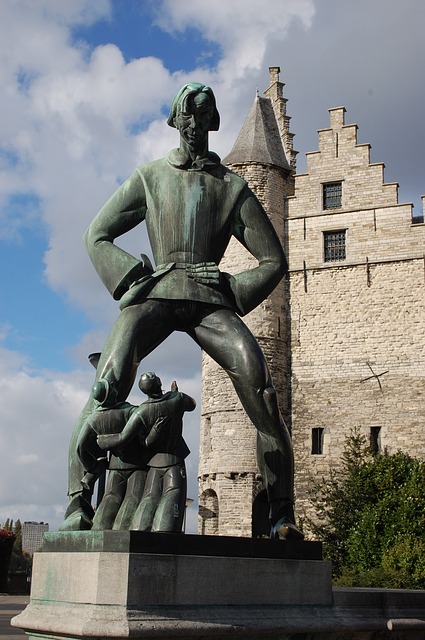
Chortle
[chawr-tl]
Quark
[kwawrk, kwahrk]
Utopia
[yoo-toh-pee-uh]

Tintinnabulation
[tin-ti-nab-yuh–ley-shuhn]
Grok
[grok]

Cyberspace
[sahy-ber-speys]

Catch-22
[kach-twen-tee-too]

SOURCE
C’mon, Get Happy: 7 Happy Expressions Defined
Happy as a clam
 Cute as they are, clams are not the most emotive creatures in the animal kingdom, so why do we say happy as a clam? Some have speculated it’s because a partially opened clam shell resembles a smile. But the expression is a shortening of the longer happy as a clam in mud at high tide or happy as a clam at high water, both of which were in usage by the mid-1800s and serve to mean “happy as a critter that’s safe from being dug up and eaten.” The longer expressions evoke a sense of relief more than the shorter happy as a clam, which is widely used to mean “extremely happy.”
Happy hour
 People were using the word happy to mean “intoxicated” as early as the mid-1600s, alluding to the merrymaking effect of alcohol. But the phrase happy hour didn’t catch on until the early 1900s. This expression originally referred to a time on board a ship allotted for recreation and entertainment for a ship’s crew. Nowadays the expression refers to cocktail hour at a bar, when drinks are served at reduced prices. This definition caught on around the era depicted in the well-lubricated offices of TV’s Mad Men.
Slaphappy
 Around the time of World War II, the word happy began appearing in words to convey temporary overexcitement. Slaphappy is one of these constructions, suggesting a dazed or “happy” state from repeated blows or slaps, literal or figurative. Slaphappy can mean “severely befuddled” or “agreeably giddy or foolish” or “cheerfully irresponsible.”
Trigger-happy
 Much like slaphappy, the happy in trigger-happy indicates a kind of temporary mental overstimulation. But in this construction, happy means “behaving in an irresponsible or obsessive manner.” The term trigger-happy entered English in the 1940s with the definition “ready to fire a gun at the least provocation.” Over time, it has taken on figurative senses including “eager to point out the mistakes or shortcomings of others” and “heedless and foolhardy in matters of great importance.”
Happy-go-lucky
 The word happy comes from the Old Norse happ meaning “chance” or “luck.” The wildcard nature of chance is reflected in the wide range of words that share this root. While the adjective happy-go-lucky, meaning “trusting cheerfully to luck” or “happily unconcerned or worried,” is widely used in positive contexts, its etymological cousin haphazard, carries a more negative connotation. The expression happy-be-lucky entered English slightly earlier than happy-go-lucky, but fell out of use in the mid-1800s.
Happy medium
 The phrase happy medium refers to a satisfactory compromise between two opposed things, or a course of action that is between two extremes. The notion of the happy medium is descended from an ancient mathematical concept called the golden section, or golden mean, in which the ratios of the different parts of a divided line are the same. This term dates from the 1600s, though is still widely used today.
Happy camper
 A happy camper is a person who is cheerful and satisfied, although the expression is frequently used in negative constructions, as in “I’m not a happy camper.” The word camper was widely used to refer to a soldier or military man when it entered English in the 1600s. It took on a more generic sense of one who camps recreationally in the mid-1800s, paving the way for the expression happy camper to emerge in the 1930s. Interestingly, use of the phrase happy camper skyrocketed in the 1980s.
Source and images
Six words that can ruin your sentence

Crutch words are words that we slip into sentences in order to give ourselves more time to think, or to emphasize a statement. Over time, they become unconscious verbal tics. Most often, crutch words do not add meaning of a statement.
Actually
[ak-choo-uh-lee]
Actually is the perfect example of a crutch word. It is meant to signify something that exists in reality, but it is more often used as a way to add punch to a statement (as in, “I actually have no idea”).
5 Fun Ways to Say Boring
Ennui
[ahn-wee, ahn-wee]
 Not all boredom is created equal: some of it is fleeting and circumstantial, and some of it teeters on existential crisis. Ennui tends toward the latter–or at least it used to. Derived from the French verb enuier meaning “to annoy,” its peak usage was in Victorian and Romantic literature to express a profound sense of weariness, even a spiritual emptiness or alienation from one’s surroundings and time. Nowadays it’s used at both ends of the boredom spectrum, but its deep literary history lends even the most shallow disinterest a grandiose air.
Bromidic
[broh-mid-ik]
 Bromide is a chemical compound that was commonly used in sedatives in the 1800 and 1900s. It took on a figurative sense to mean a trite saying or verbal sedative, or a person who is platitudinous and boring, in the early 1900s with help of the U.S. humorist Frank Gelett Burgess, who published a book titled Are You a Bromide? in 1907. The next time a particularly bland work meeting lulls you into a near coma, remember to mentally log it as bromidic just before nodding off.
Prosaic
[proh-zey-ik]
 If your personal brand of boredom stems from a deficit of literal or figurative poetry in your life, this is the word for you. Now commonly used to mean dull, matter-of-fact, or unimaginative, prosaic entered the lexicon as the adjectival form of the word prose–as in not poetry. Its evolution to mean uninspired and commonplace in a broader context feels in many ways like a love letter to the oft-neglected literary genre.
Insipid
[in-sip-id]
 Much like bland and flavorless, insipid is commonly used to describe food that leaves your tastebuds wanting more, but it’s also used in an abstract sense to describe a person, place or thing that lacks distinction, depth or intrigue. Its versatility can be attributed to its root word, the Latin sapidus, which translates to well-tasted, wise, or prudent. The next time you find yourself surrounded by droning company and uninspired cuisine (perhaps on your next flight?) liven things up with this handy twofer.
Platitudinous
[plat-i-tood-n-uhs, –tyood-]
 Stemming from the French word for flat, plat (think plateau), platitudinous is used most frequently to refer to lackluster or trite use of language. A political speech brimming with tiresome rhetoric and cliches can be said to be platitudinous, but with this illuminating descriptor in your word arsenal, your bemoaning of the speech doesn’t have to be.
Source and images
50 Words That Sound Rude But Actually Aren’t
To paraphrase Krusty the Clown, comedy isn’t dirty words—it’s words that sound dirty, like mukluk. He’s right, of course. Some words really do sound like they mean something quite different from their otherwise entirely innocent definition (a mukluk is an Inuit sealskin boot, in case you were wondering), and no matter how clean-minded you might be, it’s hard not to raise an eyebrow or a wry smile whenever someone says something like cockchafer or sexangle. Here are 50 words that might sound rude, but really aren’t. Honest.
1. AHOLEHOLE
If you read that as “a-hole,” then think again. Aholehole is pronounced “ah-holy-holy,” and is the name of a species of Hawaiian flagtail fish native to the central Pacific.
2. AKTASHITE
Aktashite is a rare mineral used commercially as an ore of arsenic, copper, and mercury. It takes its name from the village of Aktash in eastern Russia, where it was first discovered in 1968. The final –ite , incidentally, is the same mineralogical suffix as in words like graphite and kryptonite.
3. ASSAPANICK
While exploring the coast of Virginia in 1606, Captain John Smith (of Pocahontas fame) wrote in his journal of a creature known to local tribes as the assapanick . By “spreading their legs, and so stretching the largeness of their skins,” he wrote, “they have been seen to fly 30 or 40 yards.” Assapanick is another name for the flying squirrel.
4. ASSART
Assart is an old medieval English legal term for an area of forested land that has been converted into arable land for growing crops. It can also be used as a verb meaning “to deforest,” preparing wooded land for farming.
5. BASTINADO
Derived from bastón, the Spanish word for a cane or walking stick, bastinado is an old 16th century word for a thrashing or caning, especially on the soles of the feet.
6. BOOBYALLA
As well as being the name of a former shipping port in northern Tasmania, boobyalla is also an Aborigine name for the wattlebird, one of a family of honeyeaters native to much of Australia.
7. BUM-BAILIFF
In his Dictionary of the English Language (1755), Samuel Johnson described a bum-bailiff as “a bailiff of the meanest kind,” and in particular, “one that is employed in arrests.”
8. BUMFIDDLER
To bumfiddle means to pollute or spoil something, in particular by scribbling or drawing on a document to make it invalid. A bumfiddler is someone who does precisely that.
9. BUMMALO
Like the aholehole, the bummalo is another tropical fish, in this case a southeast Asian lizardfish. When listed on Indian menus it goes by the slightly more appetizing name of “Bombay duck.”
10. CLATTERFART
According to a Tudor dictionary published in 1552, a clatterfart is someone who “wyl disclose anye light secreate”—in other words, it’s a gossip or blabbermouth.

11. COCKAPERT
Cockapert is an Elizabethan name for “a saucy fellow” according to the Oxford English Dictionary, but it can also be used as an adjective meaning “impudent” or “smart-alecky.”
12. COCK-BELL
A cock-bell can be a small handbell, a type of wildflower that grows in the spring, and an old English dialect word for an icicle. In any case, it’s derived from coque, the French word for a seashell.
13. COCKCHAFER
The cockchafer is a large beetle native to Europe and western Asia. The origin of its name is a mystery, but one theory claims the beetles are so characteristically aggressive that they can be made to fight one another like cockerels.
14. DIK-DIK
Standing little more than a foot tall at the shoulder, the dik-dik is one of the smallest antelopes in all of Africa. Their name is apparently an imitation of their alarm call.
15. DREAMHOLE
A dreamhole is a small slit or opening made in the wall of a building to let in sunlight or fresh air. It was also once used to refer to holes in watchtowers used by lookouts and guards, or to openings left in the walls of church towers to amplify the sounds of the bells.
16. FANNY-BLOWER
According to one 19th century glossary of industrial slang, a fanny-blower or fanner was “used in the scissor-grinding industry,” and comprised “a wheel with vanes, fixed onto a rotating shaft, enclosed in a case or chamber to create a blast of air.” In other words, it’s a fan.
17. FARTLEK
Fartlek is a form of athletic training in which intervals of intensive and much less strenuous exercise are alternated in one long continuous workout. It literally means “speed-play” in Swedish.
18. FUKSHEET
Fuk was an old Middle English word for a sail, and in particular the foremost sail on a ship. A fukmast, ultimately, is a ship’s foremast, while the fuksheet or fuksail is the sail attached to the ship’s fukmast.

19. GULLGROPER
To grope a gull is an old Tudor English expression meaning “to take advantage of someone,” or “to swindle an unsuspecting victim”—and a gullgroper does just that.
20. HABOOB
Taking its name from an Arabic word meaning “blustering” or “blowing,” a haboob is a dry wind that blows across deserts, dustbowls, and other arid regions often at great speed, forming vast sandstorms as it goes. Haboobs are typically caused by the collapse of a cold front of air, which blasts dust and sediment up from the desert floor as it falls.
21. HUMPENSCRUMP
The Oxford English Dictionary calls a humpenscrump “a musical instrument of rude construction.” Alongside others like humstrum, celestinette and wind-broach, it was originally another name for the hurdy-gurdy.
22. INVAGINATION
Invagination is simply the process of putting something inside something else (and in particular, a sword into a scabbard), or else is the proper name for turning something inside out. The opposite is called evagination.
23. JACULATE
Jaculation is the act of throwing or jostling something around, while to jaculate means “to rush or jolt forward suddenly.”
24. JERKINHEAD
A jerkinhead is a roof that is only partly gabled (i.e., only forms part of a triangle beneath its eaves) and is instead levelled or squared off at the top, forming a flattened area known as a “hip.” Jerkinheads are also known as “half-hipped” or “clipped-gable” roofs.
25. KNOBSTICK
As well as being an old nickname for a walking stick or truncheon, knobstick is an old 19th century slang word for a workman who breaks a strike, or for a person hired to take the place of a striking employee.

26. KUMBANG
Like the haboob, the kumbang is another hot, arid wind, in this case one that blows seasonally in the lowlands of western Indonesia.
27. LOBCOCKED
Lobcock is an old Tudor English word for an idiot or an unsophisticated, clownish bumpkin. Lobcocked is an equally ancient adjective meaning “boorish” or “naïve.”
28. NESTLE-COCK
A nestle-cock is the last bird to hatch from a clutch of eggs. It dates from the early 1600s, when it was also used as a nickname for an overly spoilt or pampered child.
29. NICKER-PECKER
Nicker-pecker is an old English dialect name for the European green woodpecker, the largest woodpecker native to Great Britain. In this context nicker is probably a derivative of nick, meaning a small cut or scratch.
30. NOBBER
In early 19th century English, boxers were nicknamed nobbers, a name apparently derived from the earlier use of nobber as a slang name for a punch or blow to the head.
31. NODGECOCK
Nodgecock, like lobcock, is another Tudor word for a fool or simpleton. It likely derives from an even earlier word, noddypoll, for someone who senselessly nods their head in agreement with any idea, no matter how good or bad it might be.
32. PAKAPOO
Pakapoo is a 19th century Australian word for a lottery or raffle. It apparently derives from a Cantonese phrase, baahk gáap piu, literally meaning “white pigeon ticket”—the Oxford English Dictionary suggests that in the original form of the game, a white dove might have been trained to select the winning ticket from all of the entries.
33. PENIAPHOBIA
Definitely not what it sounds like, peniaphobia is actually the fear of poverty.
34. PENISTONE
Penistone (pronounced “pen-is-tun”, before you ask) is the name of a picturesque market town in Yorkshire, England, which has given its name to both a type of coarse woollen fabric and a type of locally produced sandstone.
35. PERSHITTIE
The Scots word pershittie means “prim,” or “overly meticulous.” It’s one of a family of late 18th–early 19th century Scots words all of similar meaning, including perjinkity, perskeety, and, most familiar of all, pernickety.
36. PISSALADIÈRE
Pissalat is a condiment popular in southern French cookery made from puréed anchovies and olive oil, mixed with garlic, pepper, and herbs. It’s used to make a type of open bread tart called a pissaladière, which is flavoured with onions and black olives.

37. PISSASPHALT
Pissasphalt is a thick semi-liquid form of bitumen, similar to tar. The first part of the name is the Greek word for pitch, pissa.
38. POONGA
Poonga oil is obtained from the seeds of the Indian beech tree, Pongamia pinnata, and is widely used across southern India as everything from a skin treatment to a replacement for diesel in engines and generators.
39. SACK-BUTT
Spelled with one T, a sackbut is an early Renaissance brass instrument similar to a trombone. Spelled with two Ts, a sack-butt is a wine barrel.
40. SEXAGESM
The adjective sexagesimal means “relating to the number 60,” while anything that proceeds sexagesimally does so in sets of 60 at a time. A sexagesm, ultimately, is one-sixtieth of something.
41. SEXANGLE
Both sexangle and the equally indelicate sexagon are simply old 17th century names for what is otherwise known as a hexagon, a plane geometric shape with six sides. The prefix sexa– is derived from the Latin word for “six” rather than its Greek equivalent, heks.
42. SEXFOILED
Dating back to the Middle English period, foil is an old-fashioned name for a leaf or petal, which is retained in the names of plants like the bird’s-foot trefoil, a type of clover, and the creeping cinquefoil, a low-growing weed of the rose family. A sexfoil is ultimately a six-leaved plant or flower, or a similarly-shaped architectural design or ornament incorporating six leaves or lobes.
43. SHITTAH
The shittah is a type of acacia tree native to Arabia and north-east Africa that is mentioned in the Old Testament Book of Isaiah as one of the trees that God “will plant in the wilderness” of Israel, alongside the cedar, pine, and myrtle. Its name was adopted into English from Hebrew in the early Middle Ages, but it can probably be traced all the way back to an Ancient Egyptian word for a thorn-tree.

44. SKIDDY-COCK
Billcock , brook-ouzel, oar-cock, velvet runner, grey-skit, and skiddy-cock are all old English dialect names for the water rail, a small and notoriously elusive wading bird found in the wetlands of Europe, Asia, and north Africa. The name skiddy-cock is thought to be derived from skit, an old 17th century word meaning “to act shyly,” or “to move rapidly and quickly”—but it could just as probably be derived from an even older 15th century word, skitter, meaning “to produce watery excrement.”
45. SLAGGER
In 19th century English, a slagger was a workman in a blast furnace whose job it was to siphon off the stony waste material, or slag, that is produced when raw metals and ores are melted at high temperatures. Even earlier than that, in 16th century English, slagger was a verb, variously used to mean “to loiter” or “creep,” or “to stumble” or “walk awkwardly.”
46. TEASE-HOLE
Staying with furnaces, a tease-hole is simply the opening in a glassmaker’s furnace through which the fuel is added.
47. TETHERADICK
Sheep farmers in some rural parts of Britain once had their own traditional counting systems, many of which are particularly ancient and predate even the Norman and Anglo-Saxon invasions of England. Most of these counting systems vanished during the Industrial Revolution, but several remain in use locally and have become fossilised in local rhymes, sayings and folk songs. Tether was an old Lake District name for the number three, while dick was the number ten; tetheradick, ultimately, was a count of 13.
48. TIT-BORE
Tit-bore—or tit-bore-tat-bore, in full—is an old 17th century Scots name for a game of peekaboo. It was once also called hitty-titty, as was, incidentally, hide and go seek.
49. TIT-TYRANT
The tit-tyrants are a family of eight species of flycatcher native to the Andes Mountains and the westernmost rainforests of South America. One of the species, the ash-breasted tit-tyrant, is one of the world’s most endangered birds with fewer than 1000 individuals left in a handful of remote, high-altitude sites in Peru and Bolivia.
50. WANKAPIN
Wankapin, or water chinquapin, is another name for the American lotus, Nelumbo lutea, a flowering plant native to Central American wetlands. The lotus was apparently introduced to what is now the southern United States by native tribes who would use the plant’s tubers and seeds (known as “alligator corn”) as a source of food.
173 foreign words and phrases in English language

Over the centuries the English language has assimilated words and phrases from a variety of other languages. In context, those listed here are often printed in italics. Read More…


AWARDS







 Just English