

Avoiding Cross-Cultural Faux Pas

| What could be wrong with sipping vodka in Russia? Or with eating with your left hand in India, or with patting the back of a colleague in Korea to thank them for a “job well done”?In many countries, these actions are harmless. But in others, they can give a wrong impression or cause offense. They could even damage a relationship or ruin a major deal.
In fact, whatever culture you’re from, it’s likely that you routinely do something that could cause offense somewhere else in the world. |
|
In this article, we’ll discuss why it is so important to be aware of different cultural traditions. We’ll also highlight some gestures and actions to avoid if you want to build good working relationships with people from these cultures.
The Importance of Cultural Awareness
It’s not just professionals working overseas who need to learn cross-cultural business etiquette. Stop and think about how many different cultures you come into contact with at work.
Even if you work in your home country, your colleagues and suppliers could hail from other cultures. Your organization might decide to acquire or merge with an organization in a different country. And your customers, too, may be located in dozens of countries worldwide.
Our world’s diversity is what makes it so fascinating. When you take time to understand the reasons for this diversity, you show respect for other people’s cultures. And when you do this in a business context, you’ll improve your working relationships and develop your own reputation.
Considering Cultural Differences
Consider the following questions when thinking about how a culture might differ from your own:
- What values does this culture embrace? How do these values compare with those of your culture?
- How do people make decisions, conduct relationships, and display emotion?
- How does this culture treat time and scheduling?
- What are the social rules and boundaries surrounding gender?
- How does this culture display and respect power? Which authority figures are revered?
- How do individuals relate to their employers?
- How do people in this culture communicate? How direct are they in what they say and mean?
| Tip 1: See our article on cultural intelligence to learn how to work well in different cultures. This is a powerful skill that can be learned and developed throughout your working life.Tip 2: Be humble. Whatever you learn about cultural differences, there will be local and regional variations that you won’t know about. Admit that you’re keen to learn, and encourage people to tell you about these variations. |
Common Cross-Cultural Mistakes
Below we’ve listed actions and items that could cause offense in a variety of cultures and countries. (Note, however, that this list isn’t exhaustive!)
Food
People abstain from eating and drinking certain foods for many religious and cultural reasons. Manners and expectations at the table can also differ.
- In Asian and Russian cultures, it’s common not to talk during a meal because the food is the focus. Most conversation takes place after dinner. This isn’t the case in, for example, Japan, where colleagues often discuss work after hours and while socializing over a meal.
- How much you eat can cause offense in some cultures. For example, your hosts in Russia, Greece, and Italy could be offended if you don’t eat enough.
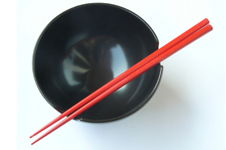
- Pay careful attention to how you use your chopsticks in Asian countries. Never use them in a gesture or for pointing, and never stick them upright in your rice bowl: this is an omen of death. Don’t use them to spear a piece of food or to tap a glass or bowl, either. And never cross your chopsticks; they should always lie side by side.
- Try to avoid turning down vodka in Russia – when it’s offered, it’s a sign of trust and friendship. Vodka is served neat, and you should drink it all at once; Russians consider sipping vodka to be rude.
- Muslims, Mormons, and Seventh Day Adventists avoid alcohol.
- Hindus, India’s largest religious population, consider it unholy to eat beef. Most are also vegetarian. Muslims and Jews are forbidden to eat pork (and, in addition, Jews do not eat shellfish), and Roman Catholics may choose fish rather than red meat on Fridays.
Body Language and Gestures
- In India, Africa, and the Middle East, people always use their right hand for greeting, touching, and eating. They consider the left hand unclean, so you should never use it for anything publicly.
- Several cultures consider crossing your legs to be rude. For example, in the Middle East and South Africa, crossed legs often show the sole of the foot, a sign of an ill wish or a bad omen. In Japan, it’s considered rude to cross your legs in the presence of someone older or more respected than you.
- Certain gestures considered acceptable in one country can be highly offensive in another. For example, a “thumbs up” gesture is seen as a sign of satisfaction in the West, but is highly offensive in some Middle Eastern countries.
- In the United States, a handshake demonstrates that negotiations are finished, and that everyone is leaving on good terms. In the Middle East, a handshake is a sign that serious negotiations are now beginning.
- In many cultures, pointing is impolite, so it’s usually best to avoid it entirely. If you must gesture toward something, use your entire hand.
| Tip: It can be challenging to know which gestures are taboo.A good rule of thumb is to avoid gestures until you’re sure that they’re acceptable. Watch how locals use body language, and follow their lead. |
Clothing and Color
- In the South Pacific, Asia, Thailand, and Russia, it’s courteous to remove your shoes before entering a home. This helps maintain cleanliness; but it’s also a sign that you’re leaving the outside world where it belongs.
- Some cultures pay careful attention to clothing. For example, it’s important to be well dressed in Italy and the United Arab Emirates, and sloppy or casual clothing is considered impolite.
- The color of your clothing could also cause offense. For example, never wear yellow in Malaysia; this color is reserved for royalty. In China, you’ll make a better impression by wearing red, which is considered lucky, than by wearing white, which is associated with death.
Personal Space
Personal space is the distance that you keep between yourself and another person. It varies widely between cultures.
- In the United States, many people prefer to keep one to two meters’ space between friends and family members, and up to three meters between strangers and business associates. These preferences are similar in the United Kingdom, Norway, Germany, and other European countries.
- The personal space requirements of Saudi Arabians are much lower: they often stand very close to one another, even those they don’t know well.
- Chinese people and people from other Asian cultures are also typically used to less personal space than Westerners.
It’s important to understand the personal space requirements of a different culture, so that you’re not perceived as rude (by standing too far away) or pushy (by standing too close).
Personal space also includes touching. In Mediterranean and South American cultures, touching is an important part of conversation and connecting. If you don’t touch others, you’ll be considered cold. However, in Eastern countries, touching is often considered taboo, and you’ll offend your colleagues if you even pat them on the back or touch their arm.
Key Points
Cross-cultural awareness is an essential skill, regardless of whether you’re working overseas, leading a cross-cultural or virtual team, or dealing with a global customer base. Learn about the culture of the country where you’re doing business to avoid cultural mistakes, and to demonstrate respect and understanding.
Research key differences in decision making, relationships, dress, food, dining, and social etiquette before working with or traveling to a different culture. Your hosts will notice your efforts, and appreciate that you took the time to learn about their culture.
Via http://www.mindtools.com
Image source
How to: LEARN

By http://www.psychotactics.com
There are two ways to eat a cake.
You can eat it in small pieces.
Or gobble the whole thing down.
Most of us would like to gobble, whether it comes to cake or learning
And like cake, learning needs to be tackled in small portions. Small portions not only help you learn, but help you learn a lot faster. Here are three core reasons why:
1) The sleep factor
2) The tiredness factor
3) The mistake factor.
Let’s start with the sleep factor
When you learn something, the brain tries to make sense of it. And then it goes about doing whatever it’s supposed to do. Then you go to bed. You might get just 6 hours of sleep, but in that time your brain is processing parts of your day. And if you’ve learned a new skill, there’s a good chance it’s doing just that—processing your new skill.
My niece, Marsha is just 8 (at the time of writing this article)
And she comes across to my office to learn to implement a concept called Bal-Vis-X. It’s a combination of skills that make students sharper and smarter than ever before. But here’s what happens during our exercise.
At first, Marsha struggles with a new exercise (there are over 300 exercises in the entire program). And we don’t force the issue. She just goes home and goes to sleep. Then she comes back for the next session. In between those two sessions, nothing has changed. The only difference is the sleep factor. Yet, almost immediately you can see the difference.
And the same applies to your learning
You can learn just about anything. And then it’s time to sleep. The very next day there will be a difference. Whether you will be able to discern the difference or not isn’t relevant, there will be a difference, nonetheless.
Over weeks and months you’ll be able to see a chunky difference. And sleep, believe it or not, plays a massive role. So yes, turning off that stupid TV (yes, stupid) will make you a lot smarter. But then, can’t bulk learning make you smarter? Surely the brain can absorb a lot more information at one go. Yes it can, but there’s a problem called tiredness that steps right in.
2) The tiredness factor
Bulk learning is plainly ineffective when compared with daily learning—and you don’t need a research scientist to tell you that. If you’re flirting with a new skill, the brain is under tremendous pressure. It’s trying to absorb what’s being written, work out the context and—because it’s a skill—apply it to your job or your life. Think about the amount of glucose that sucks up from your body. Now multiply that learning over 3 hours, or a day, and what you’ll find are drop outs.
It would seem that you’ve heard it all, and yet unless you have a phenomenal ability, there’s a chance you lost little chunks past the first ten minutes of instruction. As the learning advances, you start losing bigger chunks.
Now admittedly this depends on your level of skill. Let’s say you already know a lot about Photoshop, and you’re sitting in a Photoshop seminar, your brain doesn’t strain too much. But the moment some new features come up, your brain has to do a fair bit of work. The more facts you have to remember the more tired it gets and dropouts are inevitable. It’s only when you see the work of others, working on the same exercise, that you realise how many subtleties you’ve missed.
When you do daily learning, you get to re-examine what you’ve learned—and what you’ve missed. And this brings us to the third part: The mistake factor.
3) The mistake factor
If you do something every day, you learn from new mistakes every day. If you bulk your learning the mistakes are all a blur. But daily mistakes get highlighted. And not just your mistakes, but in a group, the mistakes of the entire group. There’s more than a good chance that a group of just 5-7 people will make as many as 5-15 mistakes in a single day. This is because everyone interprets information differently, and executes differently.
So you get to learn—and more importantly, revise what you know. And what you don’t know. Bulk learning is not as efficient, because the mistakes are made en masse, and the teacher may not be overly keen to point out 35 mistakes in one day. Over a week, 35 mistakes are just 5 mistakes a day. Every mistake gets its own spotlight and hence you get the chance to eliminate those mistakes systematically.
And yet most of us believe in bulk learning
And this is because we’re in a hurry. Yet, the best way to learn something, is to slow things down considerably. It takes most people about 2-3 years to become extremely proficient at a skill like writing or drawing. Yet with the right teacher and the right system this can be shortened to just 6-8 months. And that’s because the pace slows down considerably. You detect and fix more errors. And what is talent, but the systematic reduction of errors?
You’ve done the gobble-gobble learning and you know the results.
Now try the daily learning. Better still, try it in a group.
And prepare to be amazed.
Photo credit: http://homebrewedchristianity.com

Quote of the day: knowledge

“Knowledge isn’t going to track you down and force itself upon you. “ Professor Lang
“No outcome, no discovery, is really an accident; it is the product of the effort invested in the process.”
Photo credit: http://urbanfragment.wordpress.com/2012/10/07/we-dont-like-stalkers/
Take a test BEFORE you start studying

“How do I start to prepare?”, invariably my answer is the same “Take a test.” BEFORE you decide to sign up for any course or tutor undertake any type of study it only makes sense that you find how much study you will need. Far too many people make assumptions about their scores. Whether you assume your score will be good or bad is irrelevant, it makes no sense to guess if you have the resources to find out the truth!
Once you’ve taken the test you must spend some time analyzing your performance and understanding what you need to do to achieve the score you want.

7 Ways to Overhaul Your Brain

While most exercise is focused on strengthening and improving your physical body and muscles, there is very little focus on keeping your brain sharp and healthy. This is interesting because the brain is obviously the most important organ in your body, not only controlling the muscles people spend hours working to build up, but also your memory, thought process, attitude, etc. Don’t get me wrong, abs are great, but the brain needs to be supplemented too. It is far more important to your overall well-being. Here are the best exercises/activities that you can do to keep your brain in tip-top condition:
1. Challenge Your Brain
The majority of people are stuck in ruts. They go to the same job everyday, hang out with the same friends and eat at the same places. While that may feel safe, it’s not the most stimulating lifestyle for your brain. Those synapses have been built up enough, so try something that you do NOT know how to do! Buy a model car kit, master the art of sudoku or crosswords, or go pick up another major at your nearest college. The point is you need to be learning new things to keep your brain honest. Form new synapses by forcing your mind to work in ways it has not worked before. Just like physical workouts, doing too much of the same exercise will eventually give no results. Switch it up!
2. Brain-Food
Eat:
– Sources of Omega-3 fatty acids, mainly fatty fish and grass-fed animals. Omega-3′s are instrumental in making your brain membranes fluid, allowing signals to be passed back and forth. Obviously communication is pretty important in the brain, so keep those signals flowing!
– Enough food everyday! Your brain needs energy too, not just your muscles.
Do Not Eat:
– Too much cholesterol, high amounts are linked to brain diseases like Alzheimers.
– Too much fat, sugar, etc. All of that bad stuff is linked to brain health in addition to overall bodily health! System-wide diseases like hypertension, Type-II Diabetes and obesity have been linked to loss in cognitive ability and memory loss. If it’s not good for your physique, it’s probably not good for your brain either.
3. Sleep Well
R.E.M. sleep is critical for the for being able to retain information and maintaining learning ability. Sleep is the time when your brain resets, builds new synapses and brain cells and rids itself of the by-products of normal use. Sleep deprivation leaves you feeling not only tired, but less able to perform simple to advanced cognitive functions. So make sure you are getting that healthy minimum of 6, if not 8 hours of sleep per night. If that’s impossible, take a short nap during the day. Naps can do a lot more than you think, so use the info below to decide how long of a nap you need:
2-5 Minute – Reduces sleepiness
5-20 Minute – Increases alertness, stamina and cognitive performace.
20-30 Minute – Perks of the 2-20 minute nap, plus helps with muscle memory and clears the brain of information build-up, hence improving memory ability.
50-90 Minute – This get’s into the REM sleep cycle, so it helps with memory consolidation and virtually everything else. REM sleep is the one cycle that we as humans need to live without going. Alternate sleep cycles adjust the body to going directly into REM sleep, skipping out on the other non-important cycles. This nap will leave you a little groggy but will reset everything and restore complete cognitive power unless you have a massive REM sleep debt built up already.
4. Remember Stuff!
When it comes to memory, the use it or lose it rule applies. And considering your cognitive ability is relatively useless if you cannnot remember what you learned yesterday, you should probably start using it. Try pulling out an old photo album and recollecting entire days or events related to the photos you see. Really try to recall even the most insignificant of details; this should be a workout for your brain. Even try to remember a full conversation that you had yesterday, anything that get’s your memory going. If you’re having a lot of trouble with even those exercises, start a journal to get yourself to remember at the end of each day. That will build you up immediately so that you can start remembering less recent events.
5. Relax Regularly
With constant activity, overthinking and stress, your brain can get very over-loaded with a bunch of thought that just does not need to be there. More importantly, stress increases the chances of dimentia and Alzhiemers. Stress relseases the fight-or-flight hormones into your brain, reducintg your ability to think clearly. So throw out the insticts and relax instead: Take 15-30 minutes during the day and just sit in silence. Eyes open or closed, breath deeply for a little bit and try to empty your mind. Think about nothing. Then meditate, pray, do yoga, or just sit there. Whatever suits you. Just get that relaxation break in during the day so you can clear your mind.
6. Concentration
The ability to concentrate is obviously huge in terms of cognitive ability. You will dramatically increase your ability to think clearly and efficiently if you are able to concentrate better. So:
1. Practice! While you are relaxing, concentrate on something. One thing that you want or a problem that needs to be solved. Keep your mind on that topic for the length of your relaxation period. This is much more difficult than it sounds so just keep doing it. If you space out, shake your head and go back to concentrating!
2. Realize when you are distracted and what is causing it. If it is something that is weighing on you, address it right there and then! If you keep getting distracted, you will just be inefficient at whatever you are consciously trying to accomplish.
7. Alcohol is a poison, you know…
Don’t go overboard. Alcohol is just bad for the brain in large amounts. Check out this page which lists a seemingly infinite amount of brain functions that alcohol abuse impairs. Memory gets hit pretty hard in addition to overall cognitive ability. If you feel the need to intoxicated, try other safer drugs (like marijuana) instead of the “devil’s juice”.



AWARDS











 Just English
