
7 great American writers on writing
Ernest Hemingway once said “All American literature comes from one book by Mark Twain called Huckleberry Finn. There was nothing before. There has been nothing as good since.” As much as we love our Ernest, we beg to differ. It’s not just the amazing books Americans have written, which cause us to contradict Papa’s viewpoint. It’s the words of wisdom these masters have shared about their craft.
John Steinbeck

Ernest Hemingway

Elmore Leonard

Toni Morrison

Stephen King

Henry Miller

F. Scott Fitzgerald

Created by the awesomely talented Chris Ritter
Via http://inktank.fi
Do you ENJOY language?
A question by one of my most beloved actors (and voices), Stephen Fry:
Do you?
Reality changes words…
…far more than the words can ever change reality.
A short lesson in political speaking
Geroff Kindle!
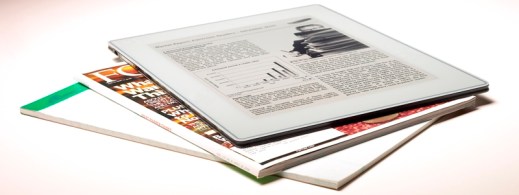
And by Kindle, I mean all types of e-readers.
And by geroff I mean, for authors’ sake, just let it be.
Every week I pick up a handful of posts by some moaning, whining and pouring buckets of anger bloggers who despise the very existence or even the idea of an electronic book. Cry me a river, then. Ok.
No, wait. What?! Come again? Are you serious? You are mad, because… let me think. Because someone is in love with the contents of a book, not with its binding, smell of glue, or of vanillin paper, or with the sound of rustling pages. Really? Is this the reason you buy books for? Kind of fetish? It’s fine by me. But.
I don’t like reading on computer or phone because it strains my eyes. I don’t like reading on a tablet either, for the very same reason. Yet I don’t write despicable posts to tell the world how I die to ban reading on anything but a soft off-white paper with 11pt Georgia font. I just don’t use what does not seem to suit me well. I also happen to dislike gumbo but I don’t deny your right to have some once in a while.
Now you let the people who actually care about worlds of words and heroes have it their way and that is whichever the way possible. Computer, e-reader, tissue paper, wall, sand, stone…never mind. Why? Because it does not matter what you think of the medium/device/bearer of the information. It’s the story that’s important. And certainly not your personal taste.
No fancy binding could divert me of satisfy my needs for READING.
Now have it your way, or other way but do not become a paper book-nazi. We have had enough.
I don’t care that much about the form,
Five Ways to Break Through Writers Block
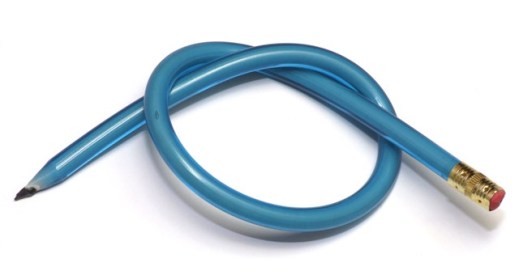
Bottom line is there are two types of writers: those who believe in writers block and those who don’t. Neither will deny the magic and energy that possesses an author when inspiration rears its mysterious head, but where their approach to writing differs is how the time is spent between those moments of inspiration.
Picture a blank page and what do you see? A canvas waiting to be filled with your words and your voice? Or a taunting emptiness that has you despairing over your first line?
When you are daunted by the incessant cursor winking at you from the shoreless white sea on your computer, one of the biggest mistakes a writer can make is succumbing to doubt.
Here are five practical tips that will snap you out of your daze and dissolve your writers block so that you can get back to the book you’re dying to write.
1) Just write!
Remember that nothing is perfect the first go-around, and if you let a blank sheet of paper intimidate you, you’re doomed from the beginning.
A book doesn’t write itself after all.
Take a walk and clear you head. Put on some music and brew some coffee. Then crack your knuckles, sit down in front of your computer and type out ideas, images – whatever pops into your head. Perhaps transcribe a dialogue between two friends, or something you overheard in line at the grocery store; before you know it, you’ll have painted an entire scene.
Maybe the language and tone aren’t your best ever, maybe the flow is all wrong and a section or two jumps into a completely different dimension, but now you have something real, something to work with and mold to your liking.
Even if out of an hour’s worth of work you keep only two or three sentences, you now have direction.
At the very least you now know what to avoid the next time you write.
2) Make an outline
Think about the beginning, middle and end of your project. Where are you starting, where are you headed and where would you like to end?
Jot down general ideas and details you plan to mention. Find a rhythm and progression to the entire project.
Reestablish your authority and realize that you can speak confidently on the subject you’ve chosen.
Once you have your bearings and a firm grip on your subject, you’ll move ahead with greater clarity and less stress.
3) Exercise
Writing exercises are another great way of dodging writers block. Sometimes all a writer needs is a little push in the right direction, and exercises can be just the ticket.
In addition to sharpening your writing skills and developing your own voice, exercises also get your creative juices flowing.
Take a few minutes, step away from the project that has you sweating, and write something for fun. These exercises can range anywhere from using a word randomly selected to detailing the dream you had the previous evening to the quirky how-did-this-green-umbrella-get-in-this-room explanations.
Long story short, you can’t write if you’re not enjoying yourself. Remember the reason you’re writing at all. Exercises can help you laugh, learn and realize your passion for writing all over again.
4) Practice makes perfect
Inspiration comes in spurts, but, like sleeping, you can regulate your cycle.
Set aside a specific hour or two each day devoted strictly to writing. Say you prefer writing in the morning. Then wake up an hour early, brew some coffee, and pull a chair up to your computer.
Before the end of the week, you’ll have a writing schedule ingrained in your daily routine, and you’ll discover that your creative groove makes its appearance at the time you’ve established.
5) Who’s listening?
Don’t forget that you’re writing for an audience – one that targets your writing for its authority and knowledge on a given subject.
Like you, your audience wants the whole story. They want the facts and scenes delivered to them without hesitation, without vagueness, but most importantly, without dilly-dallying. The last thing your audience wants is to be bored.
Writers block can be a good indication that you’re simply bored with what you’ve written, and you can safely deduce that your audience will be as well when they open your future book.
Go back and read what you’ve written. Where did the energy fizzle out and the tone take a nosedive? What was the most interesting part and what made it so invigorated? Your readers are smart people, not unlike yourself, and the flaws as well as the virtues you notice in your own writing will be the same ones your audience sees as well.
Some authors envision a single person to whom they are telling their story in order to give their audience a face, a listening ear and a doubtful expression.
For example, Kurt Vonnegut pictured himself writing to his sister when he started a book. For him, she acted as the devil’s advocate, frowning when a sentence sounded sour, laughing when a scene tickled her.
Don’t get bogged down by the incomprehensible size of your audience. Take a page from the Vonnegut book on writing and picture a friend, a family member, anyone you trust, and let them be your guide!





I challenge you: just finish it
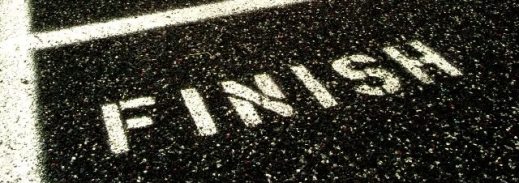
I know that most of the times I am just like a mathematician who loses interest in the problem once they find there is a solution.
I cannot focus my attention on a single thing.
In my head a new idea is always impeccable and I am surefooted and adequate to doing it. I imagine the end result, the rapture, the joy, and… my interest evaporates.
-
Doable = No challenge.
-
No challenge = No interest = Not for me (I have a new idea!)
Same with reading. In the past four years there were just two periods when I have been reading just one book at a time: the Harry Potter and later the Hunger series. My other books in the queue are just equally interesting, so I alternate between all of them. 30 pages of this one, 20% of the other. The books are now over 200 (two hundred). Yep. This is an issue.
- Starting isn’t Useful Without Finishing
Starting interesting things is a worthwhile trait, but perhaps a more important one is finishing those things. The world is full of half-finished projects which could have been great if the fire-starter hadn’t burnt out a month or two in.
The courage to start things needs to be matched with the discipline to see them through. They’re both critical, and my guess is that you can probably assess which one you need to work on.
http://www.scotthyoung.com/blog/2012/02/19/just-finish-it/
What is it with my finished projects?
The unexpected happens.
My sewing: I start with an idea (and a pattern) and end up with a completely different outcome. Get-go with a skirt pattern, end up with a dress. (too much imagination)
My blogging: You can bet that what you are reading now are not the perfect ideas, dressed in pluperfect words, dancing in excellent grammar lines that I had in my mind 30 minutes ago… (this is nothing like it)
And I do not like the unexpected. Nope, no surprises for my liking.
Ahem…decide!
The first small step.
I made my decision to finish the 240 book lot before thinking about buying or borrowing new one.
Three days in the venture, I already have finished 3 books, and today will be the fourth and the fifth.
To You
So, as much as I challenge myself, I challenge you: just finish it.
Whether it is a book you read/write, a project, or a simple task, don’t always strive for perfection at any cost (paralysing you from doing a thing), reach for the end line. Finish. Then go back, polish, edit, revise, re-write, re-do, but first have it complete. You will clear you mind for the new ideas instead of rethinking the pending ones. “Truth will sooner come out from error than from confusion.” ~Francis Bacon
Just do it. Finish
(and then tell me how you did it, I still learn),
P.S. 11 hours later my finish-two-books-today mission is complete. How about your progress? I am eager to know (but also can wait). 🙂
Quote of the day

In literature, as in love, we are astonished at what is chosen by others.
Andre Maurois
The the impotence of proofreading
Here’s another performance of Taylor Mali, this time on the importance of proofreading your works.
A good laugh and yet some food for thought 🙂
Has this ever happened to you?
You work very horde on a paper for English clash
And then get a very glow raid (like a D or even a D=)
and all because you are the word1s liverwurst spoiler.
Proofreading your peppers is a matter of the the utmost impotence.
This is a problem that affects manly, manly students.
I myself was such a bed spiller once upon a term
that my English teacher in my sophomoric year,
Mrs. Myth, said I would never get into a good colleague.
And that1s all I wanted, just to get into a good colleague.
Not just anal community colleague,
because I wouldn1t be happy at anal community colleague.
I needed a place that would offer me intellectual simulation,
I really need to be challenged, challenged dentally.
I know this makes me sound like a stereo,
but I really wanted to go to an ivory legal collegue.
So I needed to improvement
or gone would be my dream of going to Harvard, Jail, or Prison
(in Prison, New Jersey).
So I got myself a spell checker
and figured I was on Sleazy Street.
But there are several missed aches
that a spell chukker can1t can1t catch catch.
For instant, if you accidentally leave a word
your spell exchequer won1t put it in you.
And God for billing purposes only
you should have serial problems with Tori Spelling
your spell Chekhov might replace a word
with one you had absolutely no detention of using.
Because what do you want it to douch?
It only does what you tell it to douche.
You1re the one with your hand on the mouth going clit, clit, clit.
It just goes to show you how embargo
one careless clit of the mouth can be.
Which reminds me of this one time during my Junior Mint.
The teacher read my entire paper on A Sale of Two Titties
out loud to all of my assmates.
I1m not joking, I1m totally cereal.
It was the most humidifying experience of my life,
being laughed at pubically.
So do yourself a flavor and follow these two Pisces of advice:
One: There is no prostitute for careful editing.
And three: When it comes to proofreading,
the red penis your friend.
Cincirily,



AWARDS









 Just English