
13 Wonderful Old English Words We Should Still Be Using Today
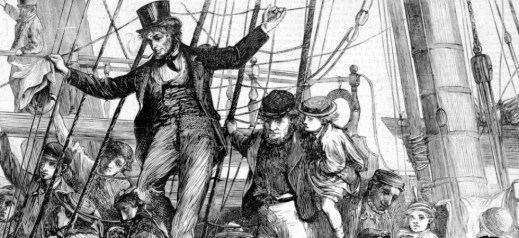
As the years pass, language evolves.
Since the days of Chaucer and Shakespeare, we can all agree English has become less flowery.
Some fantastic vocabulary just dropped out of everyday conversation.
Author Mark Forsyth writes about the words we’ve lost. From his book “Horologicon” to his Tumblr and published articles, we compiled a list of the best words that need reviving.
1. Ultracrepidarian (n):”Somebody who gives opinions on subjects they know nothing about.”
Example: Too many ultracrepidarians discuss the conflict in Syria.
2. Snollygoster (n): “a shrewed, unprincipled person, especially a politician.”
Example: Many consider Chris Christie a snollygoster after the Bridgegate scandal.
3. Zwodder (n): “a drowsy and stupid state of body or mind.”
Example: Without my morning coffee, I remain in a zwodder all day.
4. Philogrobolized (adj): “conveys a hangover without ever having to admit you’ve been drinking.”
Example: Pedialyte freezer pops can save even the most philogrobized partier.
5. Grufeling (v): “To lie close wrapped up and in a comfortable-looking manner; used in ridicule.”
Example: Avoid grufeling in the face of a challenge.
6. Clinomania (n): “an obsessive desire to lie down.”
Example: Without adequate sleep, you’ll suffer from more than clinomania.
7. Hum durgeon (n): “an imaginary illness; also “the thickest part of his thigh is nearest his arse.”
Example: You should never claim hum durgeon to miss work.
8. Quomodocunquize (v): “to make money in any way that you can.”
Example: Rather than quomodocunquizing, invest your money wisely.
9. Fudgel (v): “pretending to work when you’re not actually doing anything at all.”
Example: Sometimes fudgeling can actually increase your focus.
10. Snecklifter (n): “a person who pokes his [or her] head into a pub to see if there’s anyone who might stand him [or her] a drink.”
Example: Snecklifters never pay for their own whiskey – or offer to buy one for you.
11. Ergophobia (n): “the morbid fear of returning to work.”
Example: The worst employees suffer from extreme ergophobia on Mondays.
12. Famelicose (adj): “constantly hungry.”
Example: I’m famelicose for a grilled cheese.
13. Groke (v): “to gaze at somebody while they’re eating in the hope that they’ll give you some of their food.”
Example: My dog constantly grokes at me longingly while I eat dinner.
Click to read:
Importantly infrequently used words to know
Source: www.businessinsider.in
Image: http://www.englishdiaspora.co.uk

41 responses to “13 Wonderful Old English Words We Should Still Be Using Today”
Trackbacks / Pingbacks
- - March 17, 2014
- - March 17, 2014
- - March 19, 2014
- - March 24, 2014
- - April 14, 2014
- - April 18, 2014
- - May 10, 2014
- - May 29, 2014
- - May 31, 2014
- - June 2, 2014
- - June 2, 2014
- - June 2, 2014
- - June 3, 2014
- - July 22, 2014
Leave a reply to EmilyL Cancel reply


AWARDS








 Just English
Reblogged this on Samal English Language Services.
I LOVE this. I am going to adopt “groke” and “snollygoster” into my vocabulary immediately!!
Snecklifter is also a wonderful beer – plentiful in Cumbria. 🙂
My mother (1920-2010) used to use the word Snecklifter to mean “a drink bought on one’s own on entering a pub (lifting the ‘sneck’ or door latch) after which (hopefully) a generous chap might pay for further sustenance”. Example: “Well we only need enough money for a snecklifter”.. Most commonly in such times used by women.
I know a few Ultracrepidarians…they belong to the opposite political party.
I’m subbing tomorrow in an AP English class and some 9th grade English classes. This will be my back-up plan!
Funny, entertaining!
I never realized that I spent a whole lifetime of Sunday’s suffering from Ergophopia, since the next day was MONDAY!
John Steinbeck enjoyed inventing words, like, Jinglebollix = a man who keeps his hands in his pockets. And ‘Frigging’ but you already know about that one, right?
I’m afraid “frigging” is centuries older than Steinbeck!
These are great! My personal favorite is fundgel. This is such a useful word!
Love it! I’m sharing this on my Author Facebook page tomorrow around noon: https://www.facebook.com/AuthorShannonAThompson?hc_location=stream
~SAT
Old English is an entire language that we don’t use anymore. It morphed into Middle English, which then morphed into Modern English. These aren’t Old English words. They’re Modern English words that are no longer in vogue. But I agree that they are awesome and should be brought back.
They probably meant “old, Englshj” rather than “Old English”!
I think you used the wrong word in your example of this word: Philogrobolized (adj): “conveys a hangover without ever having to admit you’ve been drinking.”
Example: Pedialyte freezer pops can save even the most philogrobized partier.
Reblogged this on kallcroft – helping to see you on the other side and commented:
Funny – for the erudite only
Number 1, 9 and 11 are so “now”. Such a lovely blog,btw.
Thank you, Mary for finding interesting bits and pieces around here. Wishing you a marvelous day/evening, Zoe
The sneck in snecklifter is the part of the latch that is raised by the handle on the outside of the door in old fashioned latches.. tmyk..
Most if not all of these are not actually old english. Maybe they are old fashioned, but that doesn’t make them old english.
In fact, most are Scots.
Lowland Scottish is, believe it or not, Old English.
These are old English words. They’re NOT Old English words…still. Nice list.
Thanks, it was really interesting to read
ferulang.wordpress.com
Some of them are not even English words. “Clinomania” and “Ergophobia” are Greek words.
At the risk of being a snollygoster I should point out what the gentlepersons above also suggested: neither Chaucer nor Shakespeare wrote in “Old English.” Chaucer is middle english, Shakespeare is considered Early Modern English. That’s why you can actually understand most of the individual words Shakespeare uses, even if the poetic form throws you for a loop. Old English = Anglo Saxon = Beowulf. I suspect most of these words are *not* Anglo Saxon. If too many people seem to be pointing this out it’s because this is one of the most common mistakes about literature/linguistics that Americans make. It would be a bit like writing a list of “5 great Latin words!” and having 5 Italian words instead.
Also I doubt anything ending in “phobia” is an old word even by general standards. But otherwise some great-souding words on this list.
nice work yo guys are doing there